Filteren

Verfijn je keuze in deze categorie. Zoeken op auteur, ISBN, title of trefwoord? Dat kan eenvoudig via zoeken bovenaan.

Staat
Prijsrange
  • Filter

    Reviews

    Gemiddelde score voor Boek2

    Goede communicatie,

    snelle levering en prima verpakt.

    Extra korting

    %

    Meer boeken is meer korting!

    • Vanaf 5 boeken
    • Vanaf 10 boeken
    • Vanaf 15 boeken
    • Vanaf 20 boeken
    • 5% korting
    • 10% korting
    • 15% korting
    • 20% korting

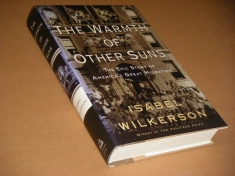
    The Warmth of Other...

    The Warmth of Other Suns. The Epic Story of America's Great Migration

    Engels. Halflinnen GEBONDEN met stofomslag, als nieuw

    NEW YORK TIMES BESTSELLER • NATIONAL BOOK CRITICS CIRCLE AWARD WINNER • ONE OF BARACK OBAMA’S FAVORITE BOOKS OF THE YEAR • TIME’S TEN BEST NONFICTION BOOKS OF THE DECADE • ONE OF THE NEW YORK TIMES’S FIVE BEST BOOKS OF THE 21ST CENTURY • A KIRKUS REVIEWS BEST NONFICTION BOOK OF THE CENTURY • LOS ANGELES TIMES’S #1 NONFICTION BOOK OF THE LAST 30 YEARS • AN OPRAH DAILY BEST NONFICTION BOOK OF THE PAST TWO DECADES

    “A brilliant and stirring epic . . . Ms. Wilkerson does for the Great Migration what John Steinbeck did for the Okies in his fiction masterpiece, The Grapes of Wrath; she humanizes history, giving it emotional and psychological depth.”—John Stauffer, The Wall Street Journal

    “What she’s done with these oral histories is stow memory in amber.”—Lynell George, Los Angeles Times

    WINNER: The Mark Lynton History Prize • The Anisfield-Wolf Award for Nonfiction • The Chicago Tribune Heartland Prize • The Hurston-Wright Award for Nonfiction • The Hillman Prize for Book Journalism • NAACP Image Award for Best Literary Debut • Stephen Ambrose Oral History Prize

    FINALIST: The PEN/John Kenneth Galbraith Award for Nonfiction • Dayton Literary Peace Prize

    ONE OF THE TEN BEST BOOKS OF THE YEAR: The New York Times, USA Today, Publishers Weekly, O: The Oprah Magazine, Salon, Newsday, The Daily Beast

    ONE OF THE BEST BOOKS OF THE YEAR: The New Yorker, The Washington Post, The Economist, Boston Globe, San Francisco Chronicle, Chicago Tribune, Entertainment Weekly, Philadelphia Inquirer, The Guardian, The Seattle Times, St. Louis Post-Dispatch, The Christian Science Monitor

    In this beautifully written masterwork, Pulitzer Prize–winning author Isabel Wilkerson presents a definitive and dramatic account of one of the great untold stories of American history: the Great Migration of six million Black citizens who fled the South for the North and West in search of a better life, from World War I to 1970.

    Wilkerson tells this interwoven story through the lives of three unforgettable protagonists: Ida Mae Gladney, a sharecropper’s wife, who in 1937 fled Mississippi for Chicago; sharp and quick-tempered George Starling, who in 1945 fled Florida for Harlem, and Robert Foster, a surgeon who left Louisiana in 1953 in hopes of making it in California.

    Wilkerson brilliantly captures their first treacherous cross-country journeys by car and train and their new lives in colonies in the New World. The Warmth of Other Suns is a bold, remarkable, and riveting work, a superb account of an “unrecognized immigration” within our own land. Through the breadth of its narrative, the beauty of the writing, the depth of its research, and the fullness of the people and lives portrayed herein, this book is a modern classic.

    Isabel Wilkerson ;

    € 20,00

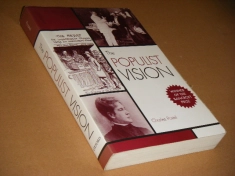
    The Populist Vision

    The Populist Vision

    Engels. Paperback. LET OP!. Veel potloodonderstrepingen. Een moeilijk te vinden boek. 

    The Populist Vision is about how Americans responded to wrenching changes in the national and global economy. In the late nineteenth century, the telegraph and steam power made America and the world a much smaller place. The new technologies also made possible large-scale bureaucratic organization and centralization. Corporations grew exponentially and the rich amassed great fortunes. Those on the short end of these changes responded in the Populist revolt, one of the most effective challenges to corporate power in American history. But what did Populism represent? Half a century ago, scholars such as Richard Hofstadter portrayed the Populist movement as an irrational response of backward-looking farmers to the challenges of modernity. Since then, historians have largely restored Populism's good name. But in so doing, they have sustained a romantic notion of Populism as the resistance movement of tradition-based and pre-modern communities to a modern and commercial society, or even a counterforce to the Enlightenment ideals of innovation and progress. Postel's work marks a departure. He argues that the Populists understood themselves as, and were in fact, modern people. Farmer Populists strove to use the new innovations for their own ends. They sought scientific and technical knowledge, formed highly centralized organizations, launched large-scale cooperative businesses, and pressed for state-centered reforms on the model of the nation's most elaborate bureaucracy--the Postal Service. Hundreds of thousands of Populist farm women sought education, employment in schools and offices, and a more modern life. Miners, railroad workers, and other labor Populists joined with farmers to give impetus to the regulatory state. Activists from Chicago, San Francisco, and other urban centers lent the movement an especially modern tone. Modernity was also menacing, as the ethos of racial progress influenced white Populists in their pursuit of racial segregation and Chinese exclusion. The Populist Vision offers a broad reassessment. Working extensively with primary sources, it looks at Populism as a national movement, taking into account both the leaders and the led. It focuses on farmers but also wage-earners and bohemian urbanites. It examines topics from technology, business, and women's rights, to government, race, and religion. At the dawn of the twenty-first century, business and political leaders are claiming that critics of their new structures of corporate control represent anti-modern attitudes towards the new realities of globalization. The Populist experience puts into question such claims about who is modern and who is not. And it suggests that modern society is not a given but is shaped by men and women who pursue alternative visions of what the modern world should be.

    Charles Postel ;

    € 4,50

    Who Chose the Gospels?...

    Who Chose the Gospels? Probing the Great Gospel Conspiracy

    Engels, gebonden met stofomslag, in zeer goede staat

    The Bible contains four Gospels which tell the story of Jesus of Nazareth. And yet, many more Gospels once existed. Who, then, determined which Gospels would, for the next two thousand years, serve as the main gateways to Jesus and his teaching?Recent books and films have traced the decision to a series of fourth-century councils and powerful bishops. After achieving victory over their rivals for the Christian name, these key players, we are now told, conspired to 'rewrite history' to make it look like their version of Christianity was the original one preached by Jesus and his apostles: the Gospels of Matthew, Mark, Luke, and John became the prime tools for their re-sculpting of the Christian story, leading to the destruction ofpreviously treasured writings like the Gospels of Judas, Mary, and Thomas. Are the four canonical Gospels, then, in the Bible as the result of a great, ecclesiastical conspiracy? Or does this explanation itself represent another 'rewriting of history', this time by a group of modern academics?Who Chose the Gospels? takes us to the scholarship behind the headlines, examining the great (and ongoing) controversy about how to look at ancient books about Jesus. How the four Biblical Gospels emerged into prominence among their competitors is a crucial question for everyone interested in understanding the historical Jesus and the development of the Christian church.

    C. E. Hill ;

    € 12,50

    The Killing of History

    The Killing of History

    Mooi ex. Engelstalige hardcover met stofomslag, als nieuw, like new.

    "For 2,500 years, since the time of Herodotus and Thucydides, historians have sought to record the truth about the past. Today, however, the discipline is suffering a potentially lethal attach from the rise to prominence of an array of French-inspired literary and social theories, each of which denies that truth and knowledge about the past are possible. These theories claim the central point on which history was founded no longer holds: there is no fundamental distinction between history and myth or between history and fiction." "Historians in classrooms from Berkeley to Paris have embraced these views, and an increasing number of literary critics and social theorists now feel free to define their own work as history and to call themselves historians. The result is revolutionary: historians have not only changed how history is taught, they are also increasingly obscuring the very facts on which the truth must be built. In The Killing of History, Keith Windschuttle offers both a devastating expose of the absurdity of these developments and a defense of the integrity of Western intellectual traditions which are now so widely attacked." "Windschuttle examines exactly what is being taught about Columbus' discovery of the New World, the history of asylums and prisons in Europe; the fall of Communism in 1989, and the Battle of Quebec in 1759. He offers a much needed defense of traditional history as a properly scientific endeavor and argues that the great works of history should still be regarded as among the finest forms of Western literature."--BOOK JACKET. Title Summary field provided by Blackwell North America, Inc. All Rights Reserved

    Keith Windschuttle ;

    € 10,00

    Prohibition. A Concise...

    Prohibition. A Concise History

    Engels. hardcover met stofomslag, als nieuw. Over het alcoholverbod in USA, plm een eeuw geleden.

    Americans have always been a hard-drinking people, but from 1920 to 1933 the country went dry. After decades of pressure from rural Protestants such as the hatchet-wielding Carry A. Nation and organizations such as the Women's Christian Temperance Union and Anti-Saloon League, the states ratified the Eighteenth Amendment to the Constitution. Bolstered by the Volstead Act, this amendment made Prohibition law: alcohol could no longer be produced, imported, transported, or sold. This bizarre episode is often humorously recalled, frequently satirized, and usually condemned. The more interesting questions, however, are how and why Prohibition came about, how Prohibition worked (and failed to work), and how Prohibition gave way to strict governmental regulation of alcohol. This book answers these questions, presenting a brief and elegant overview of the Prohibition era and its legacy.

    During the 1920s alcohol prices rose, quality declined, and consumption dropped. The black market thrived, filling the pockets of mobsters and bootleggers. Since beer was too bulky to hide and largely disappeared, drinkers sipped cocktails made with moonshine or poor-grade imported liquor. The all-male saloon gave way to the speakeasy, where together men and women drank, smoked, and danced to jazz.

    After the onset of the Great Depression, support for Prohibition collapsed because of the rise in gangster violence and the need for revenue at local, state, and federal levels. As public opinion turned, Franklin Delano Roosevelt promised to repeal Prohibition in 1932. The legalization of beer came in April 1933, followed by the Twenty-first Amendment's repeal of the Eighteenth that December. State alcohol control boards soon adopted strong regulations, and their legacies continue to influence American drinking habits. Soon after, Bill Wilson and Dr. Bob Smith founded Alcoholics Anonymous (AA). The alcohol problem had shifted from being a moral issue during the nineteenth century to a social, cultural, and political one during the campaign for Prohibition, and finally, to a therapeutic one involving individuals. As drinking returned to pre-Prohibition levels, a Neo-Prohibition emerged, led by groups such as Mothers against Drunk Driving, and ultimately resulted in a higher legal drinking age and other legislative measures.

    With his unparalleled expertise regarding American drinking patterns, W. J. Rorabaugh provides an accessible synthesis of one of the most important topics in US history, a topic that remains relevant today amidst rising concerns over binge-drinking and alcohol culture on college campuses.

    W. J. Rorabaugh ;

    € 8,50

    The Age of Confucian Rule

    The Age of Confucian Rule

    Paperback, Engels. In zeer goede staat

    Just over a thousand years ago, the Song dynasty emerged as the most advanced civilization on earth. Within two centuries, China was home to nearly half of all humankind. In this concise history, we learn why the inventiveness of this era has been favorably compared with the European Renaissance, which in many ways the Song transformation surpassed.

    With the chaotic dissolution of the Tang dynasty, the old aristocratic families vanished. A new class of scholar-officials—products of a meritocratic examination system—took up the task of reshaping Chinese tradition by adapting the precepts of Confucianism to a rapidly changing world. Through fiscal reforms, these elites liberalized the economy, eased the tax burden, and put paper money into circulation. Their redesigned capitals buzzed with traders, while the education system offered advancement to talented men of modest means. Their rationalist approach led to inventions in printing, shipbuilding, weaving, ceramics manufacture, mining, and agriculture. With a realist’s eye, they studied the natural world and applied their observations in art and science. And with the souls of diplomats, they chose peace over war with the aggressors on their borders. Yet persistent military threats from these nomadic tribes—which the Chinese scorned as their cultural inferiors—redefined China’s understanding of its place in the world and solidified a sense of what it meant to be Chinese.

    The Age of Confucian Rule is an essential introduction to this transformative era. “A scholar should congratulate himself that he has been born in such a time” (Zhao Ruyu, 1194).

    Dieter Kuhn ;

    € 13,50

    Constant Battles

    Constant Battles

    Engels. Paperback, als nieuw met kleine beschadiging (vouwtje in de vorm van een ezelsoor)

    With armed conflict in the Persian Gulf now upon us, Harvard archaeologist Steven LeBlanc takes a long-term view of the nature and roots of war, presenting a controversial thesis: The notion of the "noble savage" living in peace with one another and in harmony with nature is a fantasy. In Constant Battles: The Myth of the Peaceful, Noble Savage, LeBlanc contends that warfare and violent conflict have existed throughout human history, and that humans have never lived in ecological balance with nature.

    The start of the second major U.S. military action in the Persian Gulf, combined with regular headlines about spiraling environmental destruction, would tempt anyone to conclude that humankind is fast approaching a catastrophic end. But as LeBlanc brilliantly argues, the archaeological record shows that the warfare and ecological destruction we find today fit into patterns of human behavior that have gone on for millions of years.

    Constant Battles surveys human history in terms of social organization-from hunter gatherers, to tribal agriculturalists, to more complex societies. LeBlanc takes the reader on his own digs around the world -- from New Guinea to the Southwestern U.S. to Turkey -- to show how he has come to discover warfare everywhere at every time. His own fieldwork combined with his archaeological, ethnographic, and historical research, presents a riveting account of how, throughout human history, people always have outgrown the carrying capacity of their environment, which has led to war.

    Ultimately, though, LeBlanc's point of view is reassuring and optimistic. As he explains the roots of warfare in human history, he also demonstrates that warfare today has far less impact than it did in the past. He also argues that, as awareness of these patterns and the advantages of modern technology increase, so does our ability to avoid war in the future.

    Steven A. LeBlanc; Katherine E. Register ;

    € 11,50
    Bezig met laden...
    close

    Favorietenlijst