Filteren

Verfijn je keuze in deze categorie. Zoeken op auteur, ISBN, title of trefwoord? Dat kan eenvoudig via zoeken bovenaan.

Staat
Prijsrange
  • Filter

    Reviews

    Gemiddelde score voor Boek2

    Goede communicatie,

    snelle levering en prima verpakt.

    Extra korting

    %

    Meer boeken is meer korting!

    • Vanaf 5 boeken
    • Vanaf 10 boeken
    • Vanaf 15 boeken
    • Vanaf 20 boeken
    • 5% korting
    • 10% korting
    • 15% korting
    • 20% korting

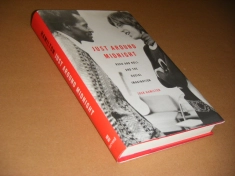
    Just Around Midnight....

    Just Around Midnight. Rock and Roll and the Racial Imagination

    Engels, half linnen gebonden, in zeer goede staat.

    By the time Jimi Hendrix died in 1970, the idea of a black man playing lead guitar in a rock band seemed exotic. Yet a mere ten years earlier, Chuck Berry and Bo Diddley had stood among the most influential rock and roll performers. Why did rock and roll become “white”? Just around Midnight reveals the interplay of popular music and racial thought that was responsible for this shift within the music industry and in the minds of fans.

    Rooted in rhythm-and-blues pioneered by black musicians, 1950s rock and roll was racially inclusive and attracted listeners and performers across the color line. In the 1960s, however, rock and roll gave way to rock: a new musical ideal regarded as more serious, more artistic—and the province of white musicians. Decoding the racial discourses that have distorted standard histories of rock music, Jack Hamilton underscores how ideas of “authenticity” have blinded us to rock’s inextricably interracial artistic enterprise.

    According to the standard storyline, the authentic white musician was guided by an individual creative vision, whereas black musicians were deemed authentic only when they stayed true to black tradition. Serious rock became white because only white musicians could be original without being accused of betraying their race. Juxtaposing Sam Cooke and Bob Dylan, Aretha Franklin and Janis Joplin, Jimi Hendrix and the Rolling Stones, and many others, Hamilton challenges the racial categories that oversimplified the sixties revolution and provides a deeper appreciation of the twists and turns that kept the music alive.

    Jack Hamilton ;

    € 17,50

    Four Parts, No...

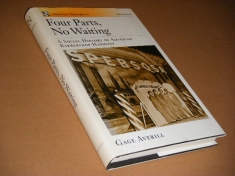
    Four Parts, No Waiting. A Social History of American Barbershop Quartet

    Engels, gebonden met omslag, als nieuw. Met CD. 

    Four Parts, No Waiting investigates the role that vernacular, barbershop-style close harmony has played in American musical history, in American life, and in the American imagination. Starting with a discussion of the first craze for Austrian four-part close harmony in the 1830s, Averill traces the popularity of this musical form in minstrel shows, black recreational singing, vaudeville, early recordings, and in the barbershop revival of the 1930s. In his exploration of barbershop, Averill uncovers a rich musical tradition--a hybrid of black and white cultural forms, practiced by amateurs, and part of a mythologized vision of small-town American life. Barbershop harmony played a central -- and overlooked -- role in the panorama of American music. Averill demonstrates that the barbershop revival was part of a depression-era neo-Victorian revival, spurred on by insecurities of economic and social change. Contemporary barbershop singing turns this nostalgic vision into lived experience. Arguing that the "old songs" function as repositories of idealized social memory, Averill reveals ideologies of gender, race, and class. This engagingly-written, often funny book critiques the nostalgic myths (especially racial myths) that have surrounded the barbershop revival, but also celebrates the civic-minded, participatory spirit of barbershop harmony. The contents of the CD have been replaced by a companion website with helpful links, resources, and audio examples.

    Gage Averill ;

    € 15,00
    Bezig met laden...
    close

    Favorietenlijst