Filteren

Verfijn je keuze in deze categorie. Zoeken op auteur, ISBN, title of trefwoord? Dat kan eenvoudig via zoeken bovenaan.

Staat
Prijsrange
  • Filter

    Reviews

    Gemiddelde score voor Boek2

    Goede communicatie,

    snelle levering en prima verpakt.

    Extra korting

    %

    Meer boeken is meer korting!

    • Vanaf 5 boeken
    • Vanaf 10 boeken
    • Vanaf 15 boeken
    • Vanaf 20 boeken
    • 5% korting
    • 10% korting
    • 15% korting
    • 20% korting

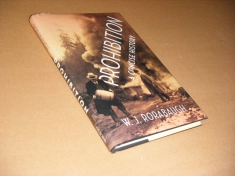
    Prohibition. A Concise...

    Prohibition. A Concise History

    Engels. hardcover met stofomslag, als nieuw. Over het alcoholverbod in USA, plm een eeuw geleden.

    Americans have always been a hard-drinking people, but from 1920 to 1933 the country went dry. After decades of pressure from rural Protestants such as the hatchet-wielding Carry A. Nation and organizations such as the Women's Christian Temperance Union and Anti-Saloon League, the states ratified the Eighteenth Amendment to the Constitution. Bolstered by the Volstead Act, this amendment made Prohibition law: alcohol could no longer be produced, imported, transported, or sold. This bizarre episode is often humorously recalled, frequently satirized, and usually condemned. The more interesting questions, however, are how and why Prohibition came about, how Prohibition worked (and failed to work), and how Prohibition gave way to strict governmental regulation of alcohol. This book answers these questions, presenting a brief and elegant overview of the Prohibition era and its legacy.

    During the 1920s alcohol prices rose, quality declined, and consumption dropped. The black market thrived, filling the pockets of mobsters and bootleggers. Since beer was too bulky to hide and largely disappeared, drinkers sipped cocktails made with moonshine or poor-grade imported liquor. The all-male saloon gave way to the speakeasy, where together men and women drank, smoked, and danced to jazz.

    After the onset of the Great Depression, support for Prohibition collapsed because of the rise in gangster violence and the need for revenue at local, state, and federal levels. As public opinion turned, Franklin Delano Roosevelt promised to repeal Prohibition in 1932. The legalization of beer came in April 1933, followed by the Twenty-first Amendment's repeal of the Eighteenth that December. State alcohol control boards soon adopted strong regulations, and their legacies continue to influence American drinking habits. Soon after, Bill Wilson and Dr. Bob Smith founded Alcoholics Anonymous (AA). The alcohol problem had shifted from being a moral issue during the nineteenth century to a social, cultural, and political one during the campaign for Prohibition, and finally, to a therapeutic one involving individuals. As drinking returned to pre-Prohibition levels, a Neo-Prohibition emerged, led by groups such as Mothers against Drunk Driving, and ultimately resulted in a higher legal drinking age and other legislative measures.

    With his unparalleled expertise regarding American drinking patterns, W. J. Rorabaugh provides an accessible synthesis of one of the most important topics in US history, a topic that remains relevant today amidst rising concerns over binge-drinking and alcohol culture on college campuses.

    W. J. Rorabaugh ;

    € 8,50

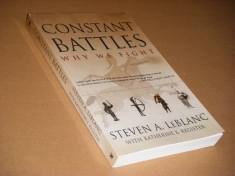
    Constant Battles

    Constant Battles

    Engels. Paperback, als nieuw met kleine beschadiging (vouwtje in de vorm van een ezelsoor)

    With armed conflict in the Persian Gulf now upon us, Harvard archaeologist Steven LeBlanc takes a long-term view of the nature and roots of war, presenting a controversial thesis: The notion of the "noble savage" living in peace with one another and in harmony with nature is a fantasy. In Constant Battles: The Myth of the Peaceful, Noble Savage, LeBlanc contends that warfare and violent conflict have existed throughout human history, and that humans have never lived in ecological balance with nature.

    The start of the second major U.S. military action in the Persian Gulf, combined with regular headlines about spiraling environmental destruction, would tempt anyone to conclude that humankind is fast approaching a catastrophic end. But as LeBlanc brilliantly argues, the archaeological record shows that the warfare and ecological destruction we find today fit into patterns of human behavior that have gone on for millions of years.

    Constant Battles surveys human history in terms of social organization-from hunter gatherers, to tribal agriculturalists, to more complex societies. LeBlanc takes the reader on his own digs around the world -- from New Guinea to the Southwestern U.S. to Turkey -- to show how he has come to discover warfare everywhere at every time. His own fieldwork combined with his archaeological, ethnographic, and historical research, presents a riveting account of how, throughout human history, people always have outgrown the carrying capacity of their environment, which has led to war.
    Ultimately, though, LeBlanc's point of view is reassuring and optimistic. As he explains the roots of warfare in human history, he also demonstrates that warfare today has far less impact than it did in the past. He also argues that, as awareness of these patterns and the advantages of modern technology increase, so does our ability to avoid war in the future.

    Steven A. LeBlanc; Katherine E. Register ;

    € 11,50

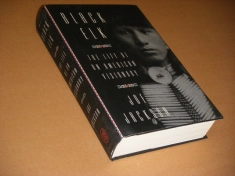
    Black Elk. The life of...

    Black Elk. The life of an American visionary

    Engels. Gebonden met omslag, in zeer goede staat
    Winner of the Society of American Historians' Francis Parkman Prize
    Winner of the PEN / Jacqueline Bograd Weld Award for Biography
    Best Biography of 2016, True West magazine
    Winner of the Western Writers of America 2017 Spur Award, Best Western Biography
    Finalist, National Book Critics Circle Award for Biography
    Long-listed for the Cundill History Prize
    One of the Best Books of 2016, The Boston Globe

    The epic life story of the Native American holy man who has inspired millions around the world

    Black Elk, the Native American holy man, is known to millions of readers around the world from his 1932 testimonial Black Elk Speaks. Adapted by the poet John G. Neihardt from a series of interviews with Black Elk and other elders at the Pine Ridge Reservation in South Dakota, Black Elk Speaks is one of the most widely read and admired works of American Indian literature. Cryptic and deeply personal, it has been read as a spiritual guide, a philosophical manifesto, and a text to be deconstructed—while the historical Black Elk has faded from view.
    In this sweeping book, Joe Jackson provides the definitive biographical account of a figure whose dramatic life converged with some of the most momentous events in the history of the American West. Born in an era of rising violence between the Sioux, white settlers, and U.S. government troops, Black Elk killed his first man at the Little Bighorn, witnessed the death of his second cousin Crazy Horse, and traveled to Europe with Buffalo Bill’s Wild West show. Upon his return, he was swept up in the traditionalist Ghost Dance movement and shaken by the Massacre at Wounded Knee. But Black Elk was not a warrior, instead accepting the path of a healer and holy man, motivated by a powerful prophetic vision that he struggled to understand. Although Black Elk embraced Catholicism in his later years, he continued to practice the old ways clandestinely and never refrained from seeking meaning in the visions that both haunted and inspired him.

    In Black Elk, Jackson has crafted a true American epic, restoring to its subject the richness of his times and gorgeously portraying a life of heroism and tragedy, adaptation and endurance, in an era of permanent crisis on the Great Plains.

    Joe Jackson ;

    € 15,00

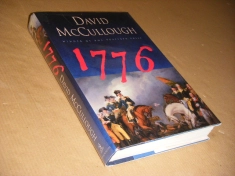
    1776 - Seventeen...

    1776 - Seventeen Seventy-six

    Engels. Halflinnen gebonden met omslag netjes in een plastic hoes , in goede staat

    Americas beloved and distinguished historian presents, in a book of breathtaking excitement, drama, and narrative force, the stirring story of the year of our nation’s birth, 1776, interweaving, on both sides of the Atlantic, the actions and decisions that led Great Britain to undertake a war against her rebellious colonial subjects and that placed America’s survival in the hands of George Washington.

    In this masterful book, David McCullough tells the intensely human story of those who marched with General George Washington in the year of the Declaration of Independence—when the whole American cause was riding on their success, without which all hope for independence would have been dashed and the noble ideals of the Declaration would have amounted to little more than words on paper.

    Based on extensive research in both American and British archives, 1776 is a powerful drama written with extraordinary narrative vitality. It is the story of Americans in the ranks, men of every shape, size, and color; farmers, schoolteachers, shoemakers, no-accounts, and mere boys turned soldiers. And it is the story of the Kings men, the British commander, William Howe, and his highly disciplined redcoats who looked on their rebel foes with contempt and fought with a valor too little known.

    Written as a companion work to his celebrated biography of John Adams, David McCulloughs 1776 is another landmark in the literature of American history.

    David McCullough ;

    € 20,00

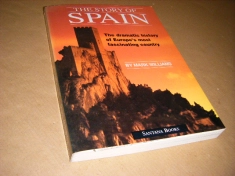
    The Story of Spain

    The Story of Spain

    Engels. Paperback, Voorin reliefstempel, verder in zeer goede staat 

    The Story of Spain is a very readable, one-volume introduction to this nation's fascinating history & culture, placed within a context of Europe & the Americas. The book is a popular history of Spain from prehistoric times to the present day, as well as the Spanish Empire (1492-1898). It includes description & analysis of political, social, economic & cultural events, which together shaped this distinctive country. The author brings to life all the dominant historical figures, including El Cid, Columbus, King Philip II, Cervantes, St. Theresa, Goya, Franco & Picasso. Chapters are included on ancient Iberia, the Roman era, medieval & Moorish Spain, the Reconquest, Spain's discovery & conquest of the Americas, its Golden Age & decline, the coming of the Bourbons, Napoleonic wars & the modern era leading up to the Spanish Civil War & Franco's dictatorship. After ten years in print, this revised edition features a new chapter covering contemporary Spain & the transition to democracy (1976-2000). For travelers to Spain, historic places to visit are listed, as well as 16 pages of color photos & dozens of other illustrations, a dynastic chart, bibliographic sources & index. Author Mark R. Williams received an M.A. in history from the University of California & lived in Spain for several years, where he worked as a teacher & journalist. Distributed through Golden Era Books, P.O. Box 5603, San Mateo, CA 94402. Website: www.GoldenEraBooks.com.

    Mark Williams ;

    € 20,00
    Bezig met laden...
    close

    Favorietenlijst