
Filteren

Verfijn je keuze in deze categorie. Zoeken op auteur, ISBN, title of trefwoord? Dat kan eenvoudig via zoeken bovenaan.

Staat
Prijsrange
  • Filter

    Reviews

    Gemiddelde score voor Boek2

    Goede communicatie,

    snelle levering en prima verpakt.

    Extra korting

    %

    Meer boeken is meer korting!

    • Vanaf 5 boeken
    • Vanaf 10 boeken
    • Vanaf 15 boeken
    • Vanaf 20 boeken
    • 5% korting
    • 10% korting
    • 15% korting
    • 20% korting
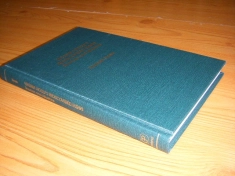
    Anthologie historique...

    Anthologie historique des lectures Erotiques

    Dikke paperback met flappen, in goede staat. Net ex. Franstalig.

    L'érotisme, tel qu'il avait fini par se constituer au cours de plus de 4 000 ans de lectures, n'existe plus. Ou plus guère. Il a perdu ces quinze dernières années ses pouvoirs de subversion et d'investigation dans le domaine amoureux. En si peu de temps, il a complètement changé de visage au point de pratiquement disparaître. Telle est la conclusion que nous livre Jean-Jacques Pauvert dans ce dernier volume de sa désormais célèbre Anthologie historique des lectures érotiques. Tableau surprenant, bouleversant, inquiétant de la période 1985-2000, - qui a vu basculer sur la fin toutes les notions sociales -, De l'infini au zéro pose des questions cruciales, sans prétendre apporter toutes les réponses. Quel est exactement le rôle des femmes aujourd'hui ? A quoi correspond le " jeu de rôle " auquel est réduit cet érotisme qui semble régner sur notre société ? La violence des adolescents est-elle liée au fait qu'ils sont maintenant directement en prise avec un érotisme brutal, jusque-là plutôt réservé aux adultes ? Que peut devenir une censure complètement impuissante ? Et aussi, quelle influence peuvent avoir sur notre érotisme - notre imaginaire -, pêle-mêle, le Viagra, l'Internet, le clonage ou les nouvelles techniques de procréatique ? Enfin, de 1985 à 2000, dans quelle mesure exactement l'humanité a-t-elle changé ? Et si elle a changé, vers quoi se dirige-t-elle ?

    Jean-Jacques Pauvert;

    € 16,99

    End of Life Choices,...

    End of Life Choices, Consensus and Controversy

    Paperback in redelijke staat. Aantekeningen en markeringen met pen. Vouwtje.

    Palliative care is undergoing a period of rapid change, both in perceptible ways such as legislation, policy, and clinical guidelines, but also in its philosophy and ethics. There is ambiguity surrounding even the definitions used, ranging from palliative care, to supportive care, to end of life care. Randall and Downie propose that the uncertainties in the current thinking on end of life care may change the two ethical (and legal) principles on which modern medical care has been built -that practitioners must obtain the informed consent of the patient for treatment, and that practitioners must seek the best health interests of their patients. They will examine a wide range of issues, themes and contradictions prevalent in modern palliative/end of life care. These include: choice, assisted suicide, roles and values, responsibility, rights, Advance Care Plans, withdrawal and withholding of treatment, advocacy, the Mental Capacity Act, best interests, definitions, and the newDepartment of Health End of Life Care Strategy. This Palliative care is undergoing a period of rapid change in perceptible ways through legislation, policy, and clinical guidelines, but also in its philosophy and ethics. End of Life Choices: Consensus and Controversies examines a wide range of issues, themes and contradictions prevalent in modern palliative/end of life care. These include: choice, assisted suicide, roles and values, responsibility, rights, Advance Care Plans, withdrawal andwithholding of treatment, advocacy, the Mental Capacity Act, best interests, definitions, and the new Department of Health End of Life Care Strategy. Split into two sections, End of Life Choices: Consensus and Controversies provides guidance through the ethical minefield that has developed for doctors and nurses who care for patients towards the end of life. The first section discusses some of the issues of end of life care as they are still widely encountered by GPs, nurses and hospitalclinicians. It presents a mainly consensus view on patient choice, consent, life-prolonging treatment and symptom relief, including sedation. The second section discusses some current controversies, such as advance care planning, preferred place of care and death, physician assisted suicide, and extended ideas of 'best interests', including the idea that there are therapeutic duties to the relatives of patients. Additional online resources outline the common ethical theories and the vocabularyused in ethical theory which will be useful for readers who are taking part in training courses. The authors hope that this book will provide a guide through the complexity of clinical situations and current regulations, and also stimulate informed debate on current controversial issues. It will be of use to all those involved in care of the terminally ill, both specialists and those outside the current palliative care domain, as well as policy makers, researchers and ethicists.

    Fiona Randall, Robert Silcock Downie;

    € 8,50

    Quantification and the...

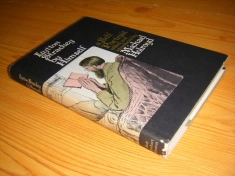
    Quantification and the Quest for Medical Certainty

    Hardback met stofomslag, als nieuw. Engelstalig. Mooi exemplaar.

    Since its inception in World War II, the clinical trial has evolved into a standard procedure in determining therapeutic efficacy in many Western industrial democracies. Its features include a "control" group of patients that do not receive the experimental treatment, the random allocation of patients to either the experimental or control group, and the use of blind assessment so that the researchers do not know which patients are in either group. Even though it has been only within the past generation that the clinical trial has moved to the forefront of medical research, comparative statistics in a therapeutic context has a much longer history. From that history J. Rosser Matthews chooses to discuss three crucial debates: that among clinicians before the Parisian Academy of Medicine in 1837, the debate in the German physiological literature during the 1850s, and, in the early twentieth century, the debate over the bacteriologist's diagnostic technique involving the "opsonic index." Matthews demonstrates that despite the very real differences separating clinician, physiologist, and bacteriologist, they all shared an antipathy toward the methods of the statistician. Since they viewed medical judgment as a form of "tacit knowledge," they downplayed the concerns of the medical statistician who was attempting to make medical inference into something explicit and quantitative. Only when "medical decision-making" moved from the cloistered confines of professional medical expertise into the arena of open political debate could the medical statistician (and the clinical trial) gain the upper hand.

    J. Rosser Matthews;

    € 45,00
    Bezig met laden...
    close

    Favorietenlijst