
Filteren

Verfijn je keuze in deze categorie. Zoeken op auteur, ISBN, title of trefwoord? Dat kan eenvoudig via zoeken bovenaan.

Staat
Prijsrange
  • Filter

    Reviews

    Gemiddelde score voor Boek2

    Goede communicatie,

    snelle levering en prima verpakt.

    Extra korting

    %

    Meer boeken is meer korting!

    • Vanaf 5 boeken
    • Vanaf 10 boeken
    • Vanaf 15 boeken
    • Vanaf 20 boeken
    • 5% korting
    • 10% korting
    • 15% korting
    • 20% korting
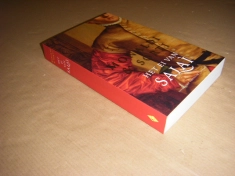
    Science

    Science

    Èngels. Gebonden met omslag. In sommige hoofdstukken komen potloodonderstrepingen voor. Verder is het een zeer gaaf exemplaar. 

    In Science, Patricia Fara rewrites science's past to provide new ways of understanding and questioning our modern technological society. Aiming not just to provide information but to make people think, this unique book explores how science has become so powerful by describing the financial interests and imperial ambitions behind its success.
    Sweeping through the centuries from ancient Babylon right up to the latest hi-tech experiments in genetics and particle physics, Fara's book also ranges internationally, challenging notions of European superiority by emphasising the importance of scientific projects based around the world, including revealing discussions of China and the Islamic Empire alongside the more familiar stories about Copernicus's sun-centered astronomy, Newton's gravity, and Darwin's theory of evolution. We see for instance how Muslim leaders encouraged science by building massive libraries, hospitals, and astronomical observatories and we rediscover the significance of medieval Europe--long overlooked--where, surprisingly, religious institutions ensured science's survival, as the learning preserved in monasteries was subsequently developed in new and unique institutions: universities. Instead of focussing on esoteric experiments and abstract theories, she explains how science belongs to the practical world of war, politics and business. And rather than glorifying scientists as idealized heroes, she tells true stories about real people--men (and some women) who needed to earn their living, who made mistakes, and who trampled down their rivals.
    Finally, this provocative volume challenges scientific supremacy itself, arguing that science is successful not because it is always indubitably right, but because people have said that it is right. Science dominates modern life, but perhaps the globe will be better off by limiting science's powers and undoing some of its effects.
    "Dismantling popular myths, taking a truly global view and dispensing with false idols, Fara's highly readable survey of science's histories is a breath of fresh air. She unerringly pinpoints the defining moods of each age, treating the past with respect and the present with discernment. This wonderfully literate book tells a story that is far, far more interesting than the tidy fictions of hindsight." -- Philip Ball, Consultant Editor of Nature
    "It's been a very long time since any reputable historian of science had the desire, the knowledge, or the nerve to undertake a book like this-- an attempt to survey the development of science from Antiquity to the present, notably including non-European materials. Patricia Fara has succeeded: Science is an elegant and compact creative synthesis of the piecemeal researches of generations of academic historians. It deserves the widest possible readership." - Steven Shapin, Professor of the History of Science, Harvard, and author of The Scientific Revolution

    Patricia Fara lectures in the History and Philosophy of Science at the University of Cambridge and is the Senior Tutor of Clare College. She is the author of numerous books, including Fatal Attraction: Magnetic Mysteries of the Enlightenment and Newton: The Making of Genius. Her writing has appeared in History Today, New Scientist, Nature, The Times and New Statesman, and she writes a regular column on scientific portraits for Endeavour.
    Books by the same author Fatal Attraction: Magnetic Mysteries of the Enlightenment by Patricia Fara. Published: 2005 Publisher: Icon Books Price: L9.99 Pandora's Breeches: Women, Science and Power in the Enlightenment by Patricia Fara. Published: 2004 Publisher: Pimlico Price: L12.99 Sex, Botany and Empire; the Stories of Carl Linnaeus and Joseph Banks by Patricia Fara. Published: 2003 Publisher: Icon Books Price: L6.99 Newton: the Making of Genius by Patricia Fara. Published: 2002 Publisher: Macmillan Price: L20 An Entertainment for Angels: Electricity in the Enlightenment by Patricia Fara. Publish

    Patricia Fara ;

    € 15,00

    The Victims'...

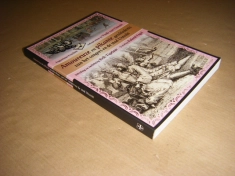
    The Victims' Revolution. The Rise of Identity Studies and the Closing of the Liberal Mind

    Engelstalige hardcover, wat dikker formaat met stofomslag. Geen naam voorin, als nieuw. Like New. 

    The 1960s and ’70s were a time of dramatic upheaval in American universities as a new generation of scholar-activists rejected traditional humanism in favor of a radical ideology that denied esthetic merit and objective truth. In The Victims’ Revolution, critic and scholar Bruce Bawer provides the first true history of this radical movement and a sweeping assessment of its intellectual and cultural fruits.

    Once, Bawer argues, the purpose of higher education had been to introduce students to the legacy of Western civilization—“the best that has been thought and said.” The new generation of radical educators sought instead to unmask the West as the perpetrator of global injustice. Age-old values of goodness, truth, and beauty were disparaged as mere weapons in an ongoing struggle of the powerful against the powerless. Shifting the focus of the humanities to the purported victims of Western colonialism, imperialism, and capitalism, the new politicized approach to the humanities gave rise to a series of identity-based programs, including Women’s Studies, Black Studies, Queer Studies, and Chicano Studies. As a result, the serious and objective study of human civilization and culture was replaced by “theoretical” approaches emphasizing group identity, victimhood, and lockstep “progressive” politics.

    Twenty-five years ago, Allan Bloom warned against the corruption of the humanities in The Closing of the American Mind. Bawer’s book presents compelling evidence that Bloom and other conservative critics were right to be alarmed. The Victims’ Revolution describes how the new identity-based disciplines came into being, examines their major proponents and texts, and trenchantly critiques their underlying premises. Bawer concludes that the influence of these programs has impoverished our thought, confused our politics, and filled the minds of their impressionable students with politically correct mush. Bawer’s book is must-reading for all those concerned not only about the declining quality of American higher education, but also about the fate of our society at large.

    Bruce Bawer;

    € 10,00

    The Invisible Heart....

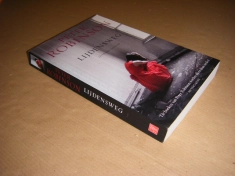
    The Invisible Heart. Economics and Family Values

    Engelstalige paperback in zeer goede staat. Geen naam voorin, rechte rug. 

    There has been much talk about family values in recent years, but little examination of the economic forces that are exploding family life and limiting the caregiving that families can provide. As Folbre points out in her provocative and insightful new book, every society must confront the problem of balancing self-interested pursuits with care for others--including children, the elderly, and the infirm. Historically, most societies enjoyed an increased supply of care by maintaining strict limits on women's freedom. But as these limits happily and inevitably give way, there are many consequences for those who still need care.

    Using the image of "the invisible heart" to evoke the forces of compassion that must temper the forces of self-interest, Folbre argues that if we don't establish a new set of rules defining our mutual responsibilities for caregiving, the penalties suffered by the needy--our very families--will increase. Intensified economic competition may drive altruism and families out of business.

    A leading feminist economist, Nancy Folbre writes in a lively, personal style--Molly Ivins cheek-to-cheek with John Kenneth Galbraith--and develops a distinctive approach to the economics of care. Unlike others who praise family values, Folbre acknowledges the complicated relationship between women and altruism. Her book offers new interpretations of such policy issues as welfare reform, school finance, and progressive taxation, and it confronts the challenges of globalization, outlining strategies for developing an economic system that rewards both individual achievement and care for others.

    Nancy Folbre ;

    € 12,50

    Mismeasuring Our...

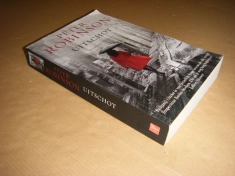
    Mismeasuring Our Lives. Why GDP Doesn't Add Up

    Engelstalige paperback in goede staat. Klein stickertje op de rug en kaft geplakt met de tekst Used, maar in werkelijkheid is daar niets van te zien en lijkt het boek verder als nieuw. By the Commission on the Measurement of Economic Performance and Social Progress (France)

    In February of 2008, amid the looming global financial crisis, President Nicolas Sarkozy of France asked Nobel Prize-winning economists Joseph Stiglitz and Amartya Sen, along with the distinguished French economist Jean Paul Fitoussi, to establish a commission of leading economists to study whether Gross Domestic Product (GDP)--the most widely used measure of economic activity--is a reliable indicator of economic and social progress. The Commission was given the further task of laying out an agenda for developing better measures.

    Mismeasuring Our Lives is the result of this major intellectual effort, one with pressing relevance for anyone engaged in assessing how and whether our economy is serving the needs of our society. The authors offer a sweeping assessment of the limits of GDP as a measurement of the well-being of societies--considering, for example, how GDP overlooks economic inequality (with the result that most people can be worse off even though average income is increasing); and does not factor environmental impacts into economic decisions.

    In place of GDP, Mismeasuring Our Lives introduces a bold new array of concepts, from sustainable measures of economic welfare, to measures of savings and wealth, to a "green GDP." At a time when policymakers worldwide are grappling with unprecedented global financial and environmental issues, here is an essential guide to measuring the things that matter.

    Joseph E. Stiglitz; Amartya Sen; Jean-Paul Fitoussi;

    € 7,50

    The Russia Hand. A...

    The Russia Hand. A Memoir of Presidential Diplomacy [SIGNED COPY]

    GESIGNEERD exemplaar. Voorin op het schutblad zit een ingeplakt kaartje met daarop de handtekening van de auteur Talbott. Forse Engelstalige hardcover, met stofomslag. Mooi exemplaar in zeer goede staat. Very Good condition. Geen naam voorin. Met index achterin.

    During the past ten years, few issues have mattered more to America’s vital interests or to the shape of the twenty-first century than Russia’s fate. To cheer the fall of a bankrupt totalitarian regime is one thing; to build on its ruins a stable democratic state is quite another. The challenge of helping to steer post-Soviet Russia-with its thousands of nuclear weapons and seething ethnic tensions-between the Scylla of a communist restoration and the Charybdis of anarchy fell to the former governor of a poor, landlocked Southern state who had won national election by focusing on domestic issues. No one could have predicted that by the end of Bill Clinton’s second term he would meet with his Kremlin counterparts more often than had all of his predecessors from Harry Truman to George Bush combined, or that his presidency and his legacy would be so determined by his need to be his own Russia hand. With Bill Clinton at every step was Strobe Talbott, the deputy secretary of state whose expertise was the former Soviet Union. Talbott was Clinton’s old friend, one of his most trusted advisers, a frequent envoy on the most sensitive of diplomatic missions and, as this book shows, a sharp-eyed observer. The Russia Hand is without question among the most candid, intimate and illuminating foreign-policy memoirs ever written in the long history of such books. It offers unparalleled insight into the inner workings of policymaking and diplomacy alike. With the scope of nearly a decade, it reveals the hidden play of personalities and the closed-door meetings that shaped the most crucial events of our time, from NATO expansion, missile defense and the Balkan wars to coping with Russia’s near-meltdown in the wake of the Asian financial crisis. The book is dominated by two gifted, charismatic and flawed men, Bill Clinton and Boris Yeltsin, who quickly formed one of the most intense and consequential bonds in the annals of statecraft. It also sheds new light on Vladimir Putin, as well as the altered landscape after September 11, 2001. The Russia Hand is the first great memoir about war and peace in the post-cold war world.

    Strobe Talbott;

    € 20,00
    Bezig met laden...
    close

    Favorietenlijst