Filteren

Verfijn je keuze in deze categorie. Zoeken op auteur, ISBN, title of trefwoord? Dat kan eenvoudig via zoeken bovenaan.

Staat
Prijsrange
  • Filter

    Reviews

    Gemiddelde score voor Boek2

    Goede communicatie,

    snelle levering en prima verpakt.

    Extra korting

    %

    Meer boeken is meer korting!

    • Vanaf 5 boeken
    • Vanaf 10 boeken
    • Vanaf 15 boeken
    • Vanaf 20 boeken
    • 5% korting
    • 10% korting
    • 15% korting
    • 20% korting

    How Democracies Die....

    How Democracies Die. What History Reveals About Our Future

    Engels, paperback, als nieuw

    'The most important book of the Trump era' The Economist

    How does a democracy die?
    What can we do to save our own?
    What lessons does history teach us?

    In the 21st century democracy is threatened like never before.

    Drawing insightful lessons from across history - from Pinochet's murderous Chilean regime to Erdogan's quiet dismantling in Turkey - Levitsky and Ziblatt explain why democracies fail, how leaders like Trump subvert them today and what each of us can do to protect our democratic rights.

    'This book looks to history to provide a guide for defending democratic norms when they are under threat, and finds that it is possible to fight back.' David Runciman

    'A useful primer on the importance of norms, institutional restraints and civic participation in maintaining a democracy - and how quickly those things can erode when we're not paying attention' President Barack Obama

    'A must-read'
    Andrew Marr, Sunday Times

    'The greatest of the many merits of Levitsky and Ziblatt's How Democracies Die is their rejection of western exceptionalism. They tell inspiring stories I had not heard before' Nick Cohen, Observer

    'Provocative, timely. One of my favourite reads this year' Elif Shafak

    'Anyone who is concerned about the future of democracy should read this brisk, accessible book. Anyone who is not concerned should definitely read it' Daron Acemoglu, co-author of Why Nations Fail

    Steven Levitsky Daniel Ziblatt ;

    € 8,50

    The Flight of the...

    The Flight of the Intellectuals

    Engels. Hardcover met omslag, vrijwel als nieuw

    Twenty years ago, Ayatollah Khomeini called for the assassination of Salman Rushdie--and writers around the world instinctively rallied to Rushdie's defense. Today, according to writer Paul Berman, "Rushdie has metastasized into an entire social class"--an ever-growing group of sharp-tongued critics of Islamist extremism, especially critics from Muslim backgrounds, who survive only because of pseudonyms and police protection. And yet, instead of being applauded, the Rushdies of today (people like Ayan Hirsi Ali and Ibn Warraq) often find themselves dismissed as "strident" or as no better than fundamentalist themselves, and contrasted unfavorably with representatives of the Islamist movement who falsely claim to be "moderates."

    How did this happen? In THE FLIGHT OF THE INTELLECTUALS, Berman--"one of America's leading public intellectuals" (Foreign Affairs)--conducts a searing examination into the intellectual atmosphere of the moment and shows how some of the West's best thinkers and journalists have fumbled badly in their efforts to grapple with Islamist ideas and violence.

    Berman's investigation of the history and nature of the Islamist movement includes some surprising revelations. In examining Hassan al-Banna, the founder of the Muslim Brotherhood, he shows the rise of an immense and often violent worldview, elements of which survives today in the brigades of al-Qaeda and Hamas. Berman also unearths the shocking story of al-Banna's associate, the Grand Mufti of Jerusalem, who collaborated personally with Adolf Hitler to incite Arab support of the Nazis' North African campaign. Echoes of the Grand Mufti's Nazified Islam can be heard among the followers of al-Banna even today.

    In a gripping and stylish narrative Berman also shows the legacy of these political traditions, most importantly by focusing on a single philosopher, who happens to be Hassan al-Banna's grandson, Oxford professor Tariq Ramadan--a figure widely celebrated in the West as a "moderate" despite his troubling ties to the Islamist movement. Looking closely into what Ramadan has actually written and said, Berman contrasts the reality of Ramadan with his image in the press.

    In doing so, THE FLIGHT OF THE INTELLECTUALS sheds light on a number of modern issues--on the massively reinvigorated anti-Semitism of our own time, on a newly fashionable turn against women's rights, and on the difficulties we have in discussing terrorism--and presents a stunning commentary about the modern media's peculiar inability to detect and analyze some of the most dangerous ideas in contemporary society.

    Paul Berman ;

    € 10,00

    Prohibition. A Concise...

    Prohibition. A Concise History

    Engels. hardcover met stofomslag, als nieuw. Over het alcoholverbod in USA, plm een eeuw geleden.

    Americans have always been a hard-drinking people, but from 1920 to 1933 the country went dry. After decades of pressure from rural Protestants such as the hatchet-wielding Carry A. Nation and organizations such as the Women's Christian Temperance Union and Anti-Saloon League, the states ratified the Eighteenth Amendment to the Constitution. Bolstered by the Volstead Act, this amendment made Prohibition law: alcohol could no longer be produced, imported, transported, or sold. This bizarre episode is often humorously recalled, frequently satirized, and usually condemned. The more interesting questions, however, are how and why Prohibition came about, how Prohibition worked (and failed to work), and how Prohibition gave way to strict governmental regulation of alcohol. This book answers these questions, presenting a brief and elegant overview of the Prohibition era and its legacy.

    During the 1920s alcohol prices rose, quality declined, and consumption dropped. The black market thrived, filling the pockets of mobsters and bootleggers. Since beer was too bulky to hide and largely disappeared, drinkers sipped cocktails made with moonshine or poor-grade imported liquor. The all-male saloon gave way to the speakeasy, where together men and women drank, smoked, and danced to jazz.

    After the onset of the Great Depression, support for Prohibition collapsed because of the rise in gangster violence and the need for revenue at local, state, and federal levels. As public opinion turned, Franklin Delano Roosevelt promised to repeal Prohibition in 1932. The legalization of beer came in April 1933, followed by the Twenty-first Amendment's repeal of the Eighteenth that December. State alcohol control boards soon adopted strong regulations, and their legacies continue to influence American drinking habits. Soon after, Bill Wilson and Dr. Bob Smith founded Alcoholics Anonymous (AA). The alcohol problem had shifted from being a moral issue during the nineteenth century to a social, cultural, and political one during the campaign for Prohibition, and finally, to a therapeutic one involving individuals. As drinking returned to pre-Prohibition levels, a Neo-Prohibition emerged, led by groups such as Mothers against Drunk Driving, and ultimately resulted in a higher legal drinking age and other legislative measures.

    With his unparalleled expertise regarding American drinking patterns, W. J. Rorabaugh provides an accessible synthesis of one of the most important topics in US history, a topic that remains relevant today amidst rising concerns over binge-drinking and alcohol culture on college campuses.

    W. J. Rorabaugh ;

    € 8,50

    The Pity Party. A...

    The Pity Party. A Mean-Spirited Diatribe Against Liberal Compassion

    Engels, in linnen gebonden met omslag, als nieuw

    In the vein of Jonah Goldberg’s Liberal Fascism comes a scathing and reasoned critique of the politics of liberal compassion—and why liberals’ lack of interest in the results of their policies renders them unfit to govern.

    For decades, conservatives have chafed at being called “heartless” and “uncaring” by liberals, without ever challenging this charge. Instead, they’ve spent their time trying to prove that they really do care. Now, political scientist William Voegeli turns the tables on this argument, making the case that “compassion” is neither the essence of personal virtue, nor the ultimate purpose of government.

    Liberals have built a remarkable edifice of government programs that are justified by appeals to compassion. Yet as Voegeli shows, they are indifferent whether these programs fail or succeed. Instead, when the problems these programs are created to solve fail to disappear, they propose to fix underperforming programs with more money, or more programs. Meanwhile, conservatives who challenge their effectiveness on practical grounds are met with charges of being “heartless right wingers.”

    Voegeli explores various programs that have become battlefields between Conservatives fighting for more efficiency, and Liberals fighting for the status quo. Along the way, he explains the philosophical underpinnings of the Liberal project that created and reinforce this misapplied ideal of compassion, and why, without a major change, Liberals must be considered unfit to govern.

    William Voegeli ;

    € 13,50

    World War IV

    World War IV

    Engels, halflinnen gebonden met stofomslag, in zeer goede staat

    For almost half a century--as a magazine editor and as the author of numerous bestselling books and hundreds of articles--Norman Podhoretz has helped drive the central political and intellectual debates in this country. Now, in this beautifully written and powerfully argued book, he takes on the most controversial issue of our time--the war against the global network of terrorists that attacked us on 9/11.
    In "World War IV," Podhoretz makes the first serious effort to set 9/11 itself, the battles that have followed it in Afghanistan and Iraq, and the war of ideas that it has provoked at home into a broad historical context. Through a brilliant telling of this epic story, Podhoretz shows that the global war against Islamofascism is as vital and necessary as the two world wars and the cold war ("World War III") by which it was preceded. He also lays out a compelling case in defense of the Bush Doctrine, contending that its new military strategy of preemption and its new political strategy of democratization represent the only viable way to fight and win the special kind of war into which we were suddenly plunged.
    Different in certain respects though the Islamofascists are from their totalitarian predecessors, this new enemy is equally dedicated to the destruction of the freedoms for which America stands and by which it lives. But it took the blatant aggression of 9/11 to make most Americans realize that war had long since been declared on us and that the time had come to fight back. Past administrations, both Republican and Democratic, had failed to respond with appropriate force to attacks by Muslim terrorists on American citizens in various countries, and even the bombing of the World Trade Center in 1993 was treated as a criminal act rather than an act of war. All this changed after 9/11, when the whole country rallied around President Bush's decision to bring the war to the enemy's home ground in the Middle East.
    The successes and the setbacks that have followed are vividly portrayed by Podhoretz, who goes on to argue that, just as in the two great struggles against totalitarianism in the twentieth century, the key to victory in World War IV will be a willingness to endure occasional reverses without losing sight of what we are fighting against, what we are fighting for, and why we have to win.

    Norman Podhoretz ;

    € 8,50

    ISIS. Inside the Army...

    ISIS. Inside the Army of Terror

    Engels, paperback, als nieuw

    A revelatory look inside the world's most dangerous terrorist group.

    With brutal attacks across the world—Paris, Beirut, Egypt, Turkey—the Islamic State of Iraq and Syria (ISIS) has proved itself the greatest threat today. They have conquered massive territories in Syria and Iraq in a bid to create a new Muslim caliphate under the strict dictates of Sharia law.

    In ISIS: Inside the Army of Terror, American journalist Michael Weiss and Syrian analyst Hassan Hassan explain how these violent extremists evolved from a nearly defeated Iraqi insurgent group into a jihadi army of international volunteers who, with slickly produced murder videos, are spreading violence and mayhem across the globe. Beginning with the early days of Abu Musab al-Zarqawi, the founder of ISIS’s first incarnation, Weiss and Hassan explain who the key players are—from their leader Abu Bakr al-Baghdadi to the former Saddam Baathists in their ranks—where they come from, how they have attracted both local and global support, and how they operate—from their social media strategy to their illicit oil revenues.

    Political and military maneuvering by the United States, Iraq, Iran, and Syria have fueled ISIS’s explosive expansion. Drawing on original interviews with former US military officials and current ISIS fighters, the authors also reveal the internecine struggles within the movement itself, as well as ISIS’s bloody hatred of Shiite Muslims, which is generating another sectarian war in the region. A new generation of terror has dawned in the world and to understand how to stop it, we must understand who they are.

    Michael Weiss; Hassan Hassan ;

    € 8,50

    Ik heb nooit iets...

    Ik heb nooit iets gelezen en alle andere fragmenten

    Dikke paperback, rug verkleurd door de zon, maar verder als nieuw. Geen naam, geen leesvouwen, mooi exemplaar, jammer van de verschoten rug alleen.

    Polemische notities over uiteenlopende onderwerpen. Karel van het Reve (1921-1999) schreef zelden iets zonder dat iemand hem daarom had gevraagd, maar 'fragmenten' schreef hij in eerste instantie voor zichzelf, om een gedachte, een herinnering vast te pinnen voor die weer vervloog. Het is te danken aan K.L. Poll, oprichter en redacteur van Hollands Maandblad, dat zij toch in dat tijdschrift werden gepubliceerd. Een deel ervan nam Van het Reve later als Fragmenten in zijn boeken op.

    Voor deze bundel Ik heb nooit iets gelezen en alle andere fragmenten geldt dat de schrijver er zelf het plan voor had, maar aan de uitvoering ervan niet meer is toegekomen. Dat is dus dit boek geworden. Het bevat, op zes vrijwel woordelijke herhalingen na, alle, dat wil zeggen ruim vijfhonderd fragmenten die Van het Reve vanaf 1963 in Hollands Maandblad publiceerde. Bijna de helft ervan verschijnt hier voor het eerst in boekvorm.
    Ik heb nooit iets gelezen biedt de lezer als het ware een blik in de werkkamer van de schrijver. In een bonte stoet komt van alles voorbij: Russische dissidenten, opinions chic, wetenschap, kruiswoordraadsels, literatuur en vele andere zaken. Fascinerend is het om te zien hoe Van het Reves ideeën, die later in opzienbarende - vaak tot grote woede van zijn tegenstanders leidende - artikelen werden verwerkt, hier vaak al in een pril stadium aanwezig zijn. Dat geldt bijvoorbeeld voor zijn bezwaren tegen Marx, Freud en Dostojevski en zijn kritiek op de evolutieleer en pseudowetenschappen als de literatuurwetenschap. Ook de periode toen Van het Reve als correspondent van Het Parool in Moskou woonde (zomer 1967 tot zomer 1968) is in de fragmenten duidelijk te herkennen.

    Karel van het Reve;

    € 7,50

    The Stakes. America at...

    The Stakes. America at the Point of No Return

    Mooi exemplaar. Forse Engelstalige hardcover met stofomslag. Nog als nieuw, like new.

    The next election is the most important one America has faced in more than a century. That’s not campaign hype. America is divided as almost never before—with contesting political factions regarding themselves not as rivals but as enemies. And the frightening thing is that, in large part, they’re right.

    The Democratic Party has become the party of “identity politics”—and every one of those identities is defined against a unifying national heritage of patriotism, pride in America’s past, and hope for a shared future.

    Offering only antagonism based on group identity—whether race, sex, or something else—the Democrats look forward to imposing nationally what they have achieved in California: one-party rule in a lockdown nation, where the ruling class makes every decision and doles out benefits to favored groups.

    Against them is a divided Republican Party. Gravely misunderstanding the opposition, old-style Republicans still seek bipartisanship and accommodation, wrongly assuming that Democrats care about playing by the tiresome old rules laid down in the Constitution and other fundamental charters of American liberty.

    The new core of the Republican Party is the populists and nationalists, who are tired of losing. The party’s only hope of victory, they are all that stand between the United States as we have traditionally understood it and a revolution—less dramatic in appearance but just as consequential as the Bolshevik Revolution in Russia.

    Michael Anton, the author of the most scathing, memorable, and quoted essay of the 2016 campaign season, “The Flight 93 Election”—which Rush Limbaugh called “one of the greatest columns ever written”—now explains in depth why the stakes have risen even higher.

    Ranging across every hot-button political topic of our time—from immigration to nationalism to war—and informed by a profound understanding of classical and American political philosophy, The Stakes will transform the way you view politics and America’s future.

    Michael Anton;

    € 10,00

    Crippled America

    Crippled America

    Engelstalige hardcover met stofomslag, op een klein vlekje op de titelpagina na, nog zo goed als nieuw.

    Look at the state of the world right now. It’s a terrible mess, and that’s putting it mildly. There has never been a more dangerous time. The politicians and special interests in Washington, DC, are directly responsible for the mess we are in. So why should we continue listening to them?

    It’s time to bring America back to its rightful owners—the American people.

    I’m not going to play the same game politicians have been playing for decades—all talk, no action, while special interests and lobbyists dictate our laws. I am shaking up the establishment on both sides of the political aisle because I can’t be bought. I want to bring America back, to make it great and prosperous again, and to be sure we are respected by our allies and feared by our adversaries.

    It’s time for action. Americans are fed up with politics as usual. And they should be! In this book, I outline my vision to make America great again, including: how to fix our failing economy; how to reform health care so it is more efficient, cost-effective, and doesn’t alienate both doctors and patients; how to rebuild our military and start winning wars—instead of watching our enemies take over—while keeping our promises to our great veterans; how to ensure that our education system offers the resources that allow our students to compete internationally, so tomorrow’s jobseekers have the tools they need to succeed; and how to immediately bring jobs back to America by closing our doors to illegal immigrants, and pressuring businesses to produce their goods at home.

    This book is my blueprint for how to Make America Great Again. It’s not hard. We just need someone with the courage to say what needs to be said.
    Donald J. Trump;

    € 7,50

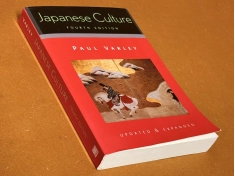
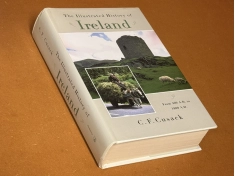
    The Age of Confucian Rule
    The Age of Confucian Rule

    Paperback, Engels. In zeer goede staat

    Just over a thousand years ago, the Song dynasty emerged as the most advanced civilization on earth. Within two centuries, China was home to nearly half of all humankind. In this concise history, we learn why the inventiveness of this era has been favorably compared with the European Renaissance, which in many ways the Song transformation surpassed.

    With the chaotic dissolution of the Tang dynasty, the old aristocratic families vanished. A new class of scholar-officials—products of a meritocratic examination system—took up the task of reshaping Chinese tradition by adapting the precepts of Confucianism to a rapidly changing world. Through fiscal reforms, these elites liberalized the economy, eased the tax burden, and put paper money into circulation. Their redesigned capitals buzzed with traders, while the education system offered advancement to talented men of modest means. Their rationalist approach led to inventions in printing, shipbuilding, weaving, ceramics manufacture, mining, and agriculture. With a realist’s eye, they studied the natural world and applied their observations in art and science. And with the souls of diplomats, they chose peace over war with the aggressors on their borders. Yet persistent military threats from these nomadic tribes—which the Chinese scorned as their cultural inferiors—redefined China’s understanding of its place in the world and solidified a sense of what it meant to be Chinese.

    The Age of Confucian Rule is an essential introduction to this transformative era. “A scholar should congratulate himself that he has been born in such a time” (Zhao Ruyu, 1194).

    Dieter Kuhn ;

    € 13,50
    Bezig met laden...
    close

    Favorietenlijst