Filteren

Verfijn je keuze in deze categorie. Zoeken op auteur, ISBN, title of trefwoord? Dat kan eenvoudig via zoeken bovenaan.

Staat
Prijsrange
  • Filter

    Reviews

    Gemiddelde score voor Boek2

    Goede communicatie,

    snelle levering en prima verpakt.

    Extra korting

    %

    Meer boeken is meer korting!

    • Vanaf 5 boeken
    • Vanaf 10 boeken
    • Vanaf 15 boeken
    • Vanaf 20 boeken
    • 5% korting
    • 10% korting
    • 15% korting
    • 20% korting

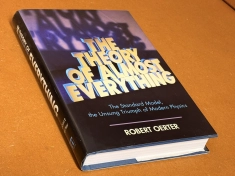
    The Theory of Almost...

    The Theory of Almost Everything

    Engelstalige hardcover met stofomslag, in goede staat. Geen naam voorin, netjes.

    (MOST OF) THE UNIVERSE IS IN YOUR HANDS

    "There is a theory in physics that explains, at the deepest level, nearly all of the phenomena that rule our daily lives.... This theory bears the unassuming name "The Standard Model of Elementary Particles," or the "Standard Model," for short. It deserves to be better known, and it deserves a better name. I call it "The Theory of Almost Everything."

    The Standard Model has a surprisingly low profile for such a fundamental and successful theory.... In physics news items, the Standard Model usually plays the whipping boy. Reports of successful experimental tests of the theory have an air of disappointment, and every hint of the theory' s inadequacy is greeted with glee. It is the Rodney Dangerfield of physical theories, it "don' t get no respect." But it is, perhaps, the pinnacle of human intellectual achievement to date.

    --From the IntroductionPraise for "THE THEORY OF ALMOST EVERYTHING

    "In an era when enormous attention is being paid to the promising but highly speculative superstring/M-theory, a great triumph of science has gone nearly unnoticed, except by physicists. Robert Oerter provides here an accessible introduction to the Standard Model--a towering example of human creativity. He outlines how the Standard Model can serve as the launching pad for humanity to--paraphrasing Einstein--see better the secrets of ' the Ancient One.' "

    Robert Oerter ;

    € 12,50

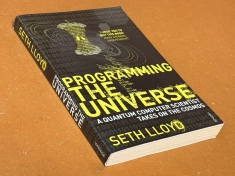
    Programming the...

    Programming the Universe. A Quantum Computer Scientist Takes on the Cosmos

    Engelstalige paperback, mooi ex. nagenoeg als nieuw. 

    The Universe Is Made Of Bits. The Way In Which The Universe Registers And Processes Information Determines What It Is And How It Behaves. It Has Been Known For More Than A Century That Every Piece Of The Universe - Every Electron, Atom, And Molecule - Registers Bits Of Information. It Is Only In The Last Ten Years, However, With The Discovery And Development Of Quantum Computers, That Scientists Have Gained A Fundamental Understanding Of Just How That Information Is Registered And Processed. Seth Lloyd Calls This Fundamental Understanding Of The Universe In Terms Of Information Processing 'The Computational Universe', And The Purpose Of This Book Is To Show How The Programmed, Computational Universe Works. Starting From Basic Concepts Of Physics, Programming The Universe Shows How All Physical Systems Register Information. It Gives An Accessible Account Of How Information Is Stored And Processed At The Level Of Electrons, Atoms, And Molecules. It Shows How The Information Processing Power Of The Universe Can Be Harnessed To Build Quantum Computers And Explains How The Universe Itself Behaves Like A Gigantic Computer, Transforming And Processing Information. It Traces The History Of Information Processing From The Big Bang To The Present Day, And Reveals How The Computational Ability Of The Universe Promotes The Evolution Of Complex Structures Such As Life. Programming The Universe Is The Story Of The Universe And The Bits It Is Made Of.

    Seth Lloyd ;

    € 7,50

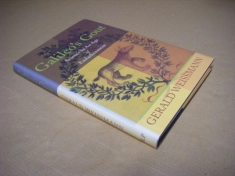
    Galileo's Gout

    Galileo's Gout

    Engels, in zeer goede staat

    "America's most interesting and important essayist." --Eric Kandel, Nobel Prize-winning author of The Age of Insight

    "[Gerald Weissmann] bridges the space between science and the humanities, and particularly between medicine and the muses, with wit, erudition, and, most important, wisdom." --Adam Gopnik

    Embryonic stem cell research. Evolution vs. intelligent design. The transformation of medicine into "health care." Climate change. Never before has science been so intertwined with politics, never have we been more dependent on scientific solutions for the preservation of the species.

    Transporting us across more than four hundred years of pivotal moments in science and medicine, Gerald Weissmann distills history's lessons for today's new age of sect and violence: "The Endarkenment." Among others, he lingers with Galileo and his daughter in seventeenth-century Florence, Diderot and d'Alembert in Enlightenment Paris, William and Alice James in fin de siècle Boston, James Watson as the John McEnroe of DNA, and Craig Venter decoding the genome at the dawn of the twenty-first century. Weissmann's message is clear: "Experimental science is our defense--perhaps our best defense--against humbug and the Endarkenment."

    Gerald Weissmann (August 7, 1930 - July 10, 2019) was a physician, scientist, editor, and essayist whose collections include The Fevers of Reason: New and Selected Essays; Epigenetics in the Age of Twitter: Pop Culture and Modern Science; Mortal and Immortal DNA: Science and the Lure of Myth; and Galileo's Gout: Science in an Age of Endarkenment.
    Gerald Weissmann ;

    € 10,00

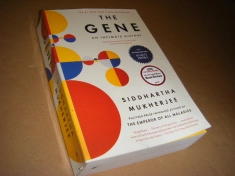
    The Gene

    The Gene

    In het Engels. Paperback, gebruikssporen, in redelijk tot best wel goede staat. 

    The #1 NEW YORK TIMES Bestseller
    The basis for the PBS Ken Burns Documentary The Gene: An Intimate History

    From the Pulitzer Prize–winning author of The Emperor of All Maladies—a fascinating history of the gene and “a magisterial account of how human minds have laboriously, ingeniously picked apart what makes us tick” (Elle).

    “Sid Mukherjee has the uncanny ability to bring together science, history, and the future in a way that is understandable and riveting, guiding us through both time and the mystery of life itself.” —Ken Burns

    “Dr. Siddhartha Mukherjee dazzled readers with his Pulitzer Prize-winning The Emperor of All Maladies in 2010. That achievement was evidently just a warm-up for his virtuoso performance in The Gene: An Intimate History, in which he braids science, history, and memoir into an epic with all the range and biblical thunder of Paradise Lost” (The New York Times). In this biography Mukherjee brings to life the quest to understand human heredity and its surprising influence on our lives, personalities, identities, fates, and choices.

    “Mukherjee expresses abstract intellectual ideas through emotional stories…[and] swaddles his medical rigor with rhapsodic tenderness, surprising vulnerability, and occasional flashes of pure poetry” (The Washington Post). Throughout, the story of Mukherjee’s own family—with its tragic and bewildering history of mental illness—reminds us of the questions that hang over our ability to translate the science of genetics from the laboratory to the real world. In riveting and dramatic prose, he describes the centuries of research and experimentation—from Aristotle and Pythagoras to Mendel and Darwin, from Boveri and Morgan to Crick, Watson and Franklin, all the way through the revolutionary twenty-first century innovators who mapped the human genome.

    “A fascinating and often sobering history of how humans came to understand the roles of genes in making us who we are—and what our manipulation of those genes might mean for our future” (Milwaukee Journal-Sentinel), The Gene is the revelatory and magisterial history of a scientific idea coming to life, the most crucial science of our time, intimately explained by a master. “The Gene is a book we all should read” (USA TODAY).

    Siddhartha Mukherjee ;

    € 7,50

    The Mathematical...

    The Mathematical Reality. Why Space and Time Are an Illusion

    Engelstalige pocket, geen naam voorin, mooie rechte rug nog, zo goed als nieuw.

    The discovery of fundamental laws of nature has influenced the fate of Homo sapiens more than anything else. Has modern physics already understood these laws? Many puzzles formulated by Albert Einstein or Paul Dirac are still unsolved today, in particular the meaning of fundamental constants. In this book, it is argued that a rational description of nature must do without any constants. A thorough analysis of the history of physics leads to the conclusion that there is a serious problem with what have been considered the basis of reality for centuries: Space and time. These may be the most accessible concepts for human perception, but are probably unsuitable for a basic understanding of nature. A methodological and historical analysis shows, however, that the underlying problem of physics is deep, unexpected and fatal: the concepts of space and time themselves, the basis of science since Newton, could be fundamentally inappropriate for the description of reality, although-or precisely because-they are so easily accessible to human perception. A new understanding of reality can only arise from mathematics. By exploring the three-dimensional unit sphere, which could replace the concepts of space and time, the author presents a mathematical vision that points the way to a new understanding of reality.

    Alexander Unzicker;

    € 8,50

    Science

    Science

    Èngels. Gebonden met omslag. In sommige hoofdstukken komen potloodonderstrepingen voor. Verder is het een zeer gaaf exemplaar. 

    In Science, Patricia Fara rewrites science's past to provide new ways of understanding and questioning our modern technological society. Aiming not just to provide information but to make people think, this unique book explores how science has become so powerful by describing the financial interests and imperial ambitions behind its success.
    Sweeping through the centuries from ancient Babylon right up to the latest hi-tech experiments in genetics and particle physics, Fara's book also ranges internationally, challenging notions of European superiority by emphasising the importance of scientific projects based around the world, including revealing discussions of China and the Islamic Empire alongside the more familiar stories about Copernicus's sun-centered astronomy, Newton's gravity, and Darwin's theory of evolution. We see for instance how Muslim leaders encouraged science by building massive libraries, hospitals, and astronomical observatories and we rediscover the significance of medieval Europe--long overlooked--where, surprisingly, religious institutions ensured science's survival, as the learning preserved in monasteries was subsequently developed in new and unique institutions: universities. Instead of focussing on esoteric experiments and abstract theories, she explains how science belongs to the practical world of war, politics and business. And rather than glorifying scientists as idealized heroes, she tells true stories about real people--men (and some women) who needed to earn their living, who made mistakes, and who trampled down their rivals.
    Finally, this provocative volume challenges scientific supremacy itself, arguing that science is successful not because it is always indubitably right, but because people have said that it is right. Science dominates modern life, but perhaps the globe will be better off by limiting science's powers and undoing some of its effects.
    "Dismantling popular myths, taking a truly global view and dispensing with false idols, Fara's highly readable survey of science's histories is a breath of fresh air. She unerringly pinpoints the defining moods of each age, treating the past with respect and the present with discernment. This wonderfully literate book tells a story that is far, far more interesting than the tidy fictions of hindsight." -- Philip Ball, Consultant Editor of Nature
    "It's been a very long time since any reputable historian of science had the desire, the knowledge, or the nerve to undertake a book like this-- an attempt to survey the development of science from Antiquity to the present, notably including non-European materials. Patricia Fara has succeeded: Science is an elegant and compact creative synthesis of the piecemeal researches of generations of academic historians. It deserves the widest possible readership." - Steven Shapin, Professor of the History of Science, Harvard, and author of The Scientific Revolution
    Patricia Fara lectures in the History and Philosophy of Science at the University of Cambridge and is the Senior Tutor of Clare College. She is the author of numerous books, including Fatal Attraction: Magnetic Mysteries of the Enlightenment and Newton: The Making of Genius. Her writing has appeared in History Today, New Scientist, Nature, The Times and New Statesman, and she writes a regular column on scientific portraits for Endeavour.
    Books by the same author Fatal Attraction: Magnetic Mysteries of the Enlightenment by Patricia Fara. Published: 2005 Publisher: Icon Books Price: L9.99 Pandora's Breeches: Women, Science and Power in the Enlightenment by Patricia Fara. Published: 2004 Publisher: Pimlico Price: L12.99 Sex, Botany and Empire; the Stories of Carl Linnaeus and Joseph Banks by Patricia Fara. Published: 2003 Publisher: Icon Books Price: L6.99 Newton: the Making of Genius by Patricia Fara. Published: 2002 Publisher: Macmillan Price: L20 An Entertainment for Angels: Electricity in the Enlightenment by Patricia Fara. Publish

    Patricia Fara ;

    € 15,00
    Bezig met laden...
    close

    Favorietenlijst