Filteren

Verfijn je keuze in deze categorie. Zoeken op auteur, ISBN, title of trefwoord? Dat kan eenvoudig via zoeken bovenaan.

Staat
Prijsrange
  • Filter

    Reviews

    Gemiddelde score voor Boek2

    Goede communicatie,

    snelle levering en prima verpakt.

    Extra korting

    %

    Meer boeken is meer korting!

    • Vanaf 5 boeken
    • Vanaf 10 boeken
    • Vanaf 15 boeken
    • Vanaf 20 boeken
    • 5% korting
    • 10% korting
    • 15% korting
    • 20% korting

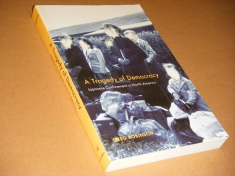
    A Tragedy of Democracy

    A Tragedy of Democracy

    Engels. Paperback, als nieuw

    The confinement of some 120,000 Japanese Americans during World War II, often called the Japanese American internment, has been described as the worst official civil rights violation of modern U. S. history. Greg Robinson not only offers a bold new understanding of these events but also studies them within a larger time frame and from a transnational perspective.

    Drawing on newly discovered material, Robinson provides a backstory of confinement that reveals for the first time the extent of the American government's surveillance of Japanese communities in the years leading up to war and the construction of what officials termed "concentration camps" for enemy aliens. He also considers the aftermath of confinement, including the place of Japanese Americans in postwar civil rights struggles, the long movement by former camp inmates for redress, and the continuing role of the camps as touchstones for nationwide commemoration and debate.

    Most remarkably, A Tragedy of Democracy is the first book to analyze official policy toward West Coast Japanese Americans within a North American context. Robinson studies confinement on the mainland alongside events in wartime Hawaii, where fears of Japanese Americans justified Army dictatorship, suspension of the Constitution, and the imposition of military tribunals. He similarly reads the treatment of Japanese Americans against Canada's confinement of 22,000 citizens and residents of Japanese ancestry from British Columbia. A Tragedy of Democracy recounts the expulsion of almost 5,000 Japanese from Mexico's Pacific Coast and the poignant story of the Japanese Latin Americans who were kidnapped from their homes and interned in the United States. Approaching Japanese confinement as a continental and international phenomenon, Robinson offers a truly kaleidoscopic understanding of its genesis and outcomes.

    The confinement of some 120,000 Japanese Americans during World War II, often called the Japanese American internment, has been described as the worst official civil rights violation of modern U. S. history. Greg Robinson not only offers a bold new understanding of these events but also studies them within a larger time frame and from a transnational perspective. Drawing on newly discovered material, Robinson provides a backstory of confinement that reveals for the first time the extent of the American government's surveillance of Japanese communities in the years leading up to war and the construction of what officials termed "concentration camps" for enemy aliens. He also considers the aftermath of confinement, including the place of Japanese Americans in postwar civil rights struggles, the long movement by former camp inmates for redress, and the continuing role of the camps as touchstones for nationwide commemoration and debate. Most remarkably, A Tragedy of Democracy is the first book to analyze official policy toward West Coast Japanese Americans within a North American context. Robinson studies confinement on the mainland alongside events in wartime Hawaii, where fears of Japanese Americans justified Army dictatorship, suspension of the Constitution, and the imposition of military tribunals. He similarly reads the treatment of Japanese Americans against Canada's confinement of 22,000 citizens and residents of Japanese ancestry from British Columbia. A Tragedy of Democracy recounts the expulsion of almost 5,000 Japanese from Mexico's Pacific Coast and the poignant story of the Japanese Latin Americans who were kidnapped from their homes and interned in the United States. Approaching Japanese confinement as a continental and international phenomenon, Robinson offers a truly kaleidoscopic understanding of its genesis and outcomes.

    Greg Robinson ;

    € 15,00

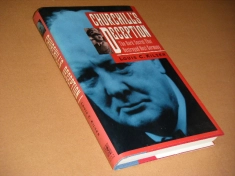
    Churchill's Deception....

    Churchill's Deception. The Dark Secret that Destroyed Nazi Germany

    Engels. Halflinnen met stofomslag, in zeergoede staat

    Churchill's Deception is the gripping story of how Winston Churchill outwitted Adolf Hitler into invading the Soviet Union - a move that changed the course of World War II. Pulitzer Prize-winning journalist Louis C. Kilzer has uncovered documentation which exposes this great and untold story, adding a new dimension to the legacy of Winston Churchill. Churchill's Deception describes how Great Britain shunned opportunities to end the war because it sought to dismember Germany, not merely to destroy Hitler. German generals were ready to topple the Fuhrer in 1939 and 1940, but only if Britain agreed not to take advantage of a civil war that would follow. England did not agree. And because of Hitler's own obsession about obtaining a pact with Great Britain, he offered to return his Western conquests in exchange for guarantees concerning Germany's interests in the East. Though Churchill held out for more, he took note of Hitler's obsessive desire for peace with England. He stoked the Fuhrer's illusions about Britain's desires for peace, in order, at first, to gain time to build its defenses. Later, when it appeared that Hitler was on the verge of victory, the British launched a final bid to hold him off. They invited the Deputy Fuhrer of Germany, Rudolf Hess, to attend a peace conference at which Hitler would negotiate the coming invasion of the Soviet Union with the British "Peace Party". Though Hitler did turn his attentions East, in the end, the game was not successful for England. She lost her empire anyway, while failing to stop a war that took more than fifty million lives. Had the British adopted an anti-Hitler, instead of an anti-Germany, foreign policy, the history of the twentiethcentury could have been dramatically altered. Kilzer raises the significant question: Would another policy have avoided the Holocaust? Engrossing and controversial, Churchill's Deception will fuel the debate over Churchill's legacy, and be an invaluable addition to any World War II collection.
    Louis C. Kilzer ;

    € 13,50

    The End

    The End

    Engels. Halflinnen gebonden met omslag, als nieuw

    From the preeminent Hitler biographer, a fascinating and original exploration of how the Third Reich was willing and able to fight to the bitter end of World War II.

    Countless books have been written about why Nazi Germany lost World War II, yet remarkably little attention has been paid to the equally vital question of how and why it was able to hold out as long as it did. The Third Reich did not surrender until Germany had been left in ruins and almost completely occupied. Even in the near-apocalyptic final months, when the war was plainly lost, the Nazis refused to sue for peace. Historically, this is extremely rare.

    Drawing on original testimony from ordinary Germans and arch-Nazis alike, award-winning historian Ian Kershaw explores this fascinating question in a gripping and focused narrative that begins with the failed bomb plot in July 1944 and ends with the German capitulation in May 1945. Hitler, desperate to avoid a repeat of the "disgraceful" German surrender in 1918, was of course critical to the Third Reich's fanatical determination, but his power was sustained only because those below him were unable, or unwilling, to challenge it. Even as the military situation grew increasingly hopeless, Wehrmacht generals fought on, their orders largely obeyed, and the regime continued its ruthless persecution of Jews, prisoners, and foreign workers. Beneath the hail of allied bombing, German society maintained some semblance of normalcy in the very last months of the war. The Berlin Philharmonic even performed on April 12, 1945, less than three weeks before Hitler's suicide.

    As Kershaw shows, the structure of Hitler's "charismatic rule" created a powerful negative bond between him and the Nazi leadership- they had no future without him, and so their fates were inextricably tied. Terror also helped the Third Reich maintain its grip on power as the regime began to wage war not only on its ideologically defined enemies but also on the German people themselves. Yet even as each month brought fresh horrors for civilians, popular support for the regime remained linked to a patriotic support of Germany and a terrible fear of the enemy closing in.

    Based on prodigious new research, Kershaw's The End is a harrowing yet enthralling portrait of the Third Reich in its last desperate gasps.

    Ian Kershaw ;

    € 16,50
    Bezig met laden...
    close

    Favorietenlijst