Filteren

Verfijn je keuze in deze categorie. Zoeken op auteur, ISBN, title of trefwoord? Dat kan eenvoudig via zoeken bovenaan.

Staat
Prijsrange
  • Filter

    Reviews

    Gemiddelde score voor Boek2

    Goede communicatie,

    snelle levering en prima verpakt.

    Extra korting

    %

    Meer boeken is meer korting!

    • Vanaf 5 boeken
    • Vanaf 10 boeken
    • Vanaf 15 boeken
    • Vanaf 20 boeken
    • 5% korting
    • 10% korting
    • 15% korting
    • 20% korting

    Making the World Work...

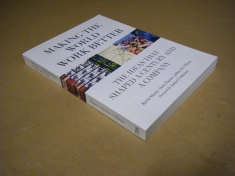
    Making the World Work Better

    Engels. Paperback, vrijwel als nieuw

    Thomas J Watson Sr's motto for IBM was THINK, and for more than a century, that one little word worked overtime. In Making the World Work Better: The Ideas That Shaped a Century and a Company , journalists Kevin Maney, Steve Hamm, and Jeffrey M. O'Brien mark the Centennial of IBM's founding by examining how IBM has distinctly contributed to the evolution of technology and the modern corporation over the past 100 years.

    The authors offer a fresh analysis through interviews of many key figures, chronicling the Nobel Prize-winning work of the company's research laboratories and uncovering rich archival material, including hundreds of vintage photographs and drawings. The book recounts the company's missteps, as well as its successes. It captures moments of high drama - from the bet-the-business gamble on the legendary System/360 in the 1960s to the turnaround from the company's near-death experience in the early 1990s.

    The authors have shaped a narrative of discoveries, struggles, individual insights and lasting impact on technology, business and society. Taken together, their essays reveal a distinctive mindset and organizational culture, animated by a deeply held commitment to the hard work of progress. IBM engineers and scientists invented many of the building blocks of modern information technology, including the memory chip, the disk drive, the scanning tunneling microscope (essential to nanotechnology) and even new fields of mathematics. IBM brought the punch-card tabulator, the mainframe and the personal computer into the mainstream of business and modern life. IBM was the first large American company to pay all employees salaries rather than hourly wages, an early champion of hiring women and minorities and a pioneer of new approaches to doing business--with its model of the globally integrated enterprise. And it has had a lasting impact on the course of society from enabling the US Social Security System, to the space program, to airline reservations, modern banking and retail, to many of the ways our world today works.

    The lessons for all businesses - indeed, all institutions - are powerful: To survive and succeed over a long period, you have to anticipate change and to be willing and able to continually transform. But while change happens, progress is deliberate. IBM - deliberately led by a pioneering culture and grounded in a set of core ideas - came into being, grew, thrived, nearly died, transformed itself... and is now charting a new path forward for its second century toward a perhaps surprising future on a planetary scale.

    Kevin Maney; Steve Hamm; Jeffrey M. OBrien ;

    € 7,50

    Game Over. The inside...

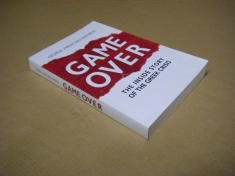
    Game Over. The inside story of the Greek crisis

    Engels. Naam voorin. Verder in zeer goede staat

    In this real-life political thriller, former Finance Minister George Papaconstantinou tells the inside story of the six years during which the Greek drama changed Europe and riveted the world. It is the story of a country forced by past mistakes into unprecedented actions with enormously painful consequences. A story about the people who shaped events by trying to respond to rapidly evolving circumstances often beyond their control. About decisions - good and bad, right and wrong - taken in official and behind-the-scenes gatherings in Brussels, Berlin, Frankfurt, Paris, London, New York, Washington and Athens; in Luxembourg châteaux courtyards, Davos kitchens and Bilderberg gatherings; in elegant offices and dreary basement meetings rooms.

    The story begins in October 2009 in Athens, when after a landslide victory, the new government shocks the world by announcing a fiscal deficit of an alarming size, until then kept secret. The "accident waiting to happen" since the launch of the Euro is finally here - but there are no contingency plans to deal with it, and the systemic nature of the crisis is initially not fully appreciated. When a bailout mechanism is finally put together, it fails to convince markets that the Eurozone will do whatever it takes to prevent the bankruptcy of one of its members. The bluff is called, and Greece is forced to apply in May 2010 for a massive loan from the Eurozone and the IMF, and accept a harsh austerity program. As the first loan installment arrives one day before the country declares default, the first wage and pension cuts produce riots and social unrest which leave three people dead.

    But the crisis is not over - it mutates. Delays in recognizing the problem and mistakes in the way it is dealt with end up opening the gates of hell for the entire Eurozone. Ireland is forced into a bailout - Portugal follows. And in Greece, the initial good program results are soon swept away by the concern in international markets that Greece might exit the Eurozone. Meanwhile the continuing austerity leads to an ever-deeper recession, rapidly rising unemployment, increasing social tensions, and real suffering.

    Six years down the road since the crisis erupted, Greece is in its third bailout, still in a severe social and economic crisis, and there are so many questions. Were other solutions available? Should Greece have threatened to default in order to get a better deal? Should there have been debt relief from the beginning? Would Greece have been better off if it had left the Euro? Has Greece saved the Euro but not itself? The book addresses these questions with the eye of someone at the heart of decision-making during the crisis.

    This is the breath-taking story of an incredible period, told for the first time not by an outside observer, but by one of its protagonists.

    George Papaconstantinou ;

    € 10,00

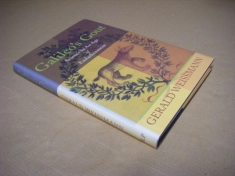
    Galileo's Gout

    Galileo's Gout

    Engels, in zeer goede staat

    "America's most interesting and important essayist." --Eric Kandel, Nobel Prize-winning author of The Age of Insight

    "[Gerald Weissmann] bridges the space between science and the humanities, and particularly between medicine and the muses, with wit, erudition, and, most important, wisdom." --Adam Gopnik

    Embryonic stem cell research. Evolution vs. intelligent design. The transformation of medicine into "health care." Climate change. Never before has science been so intertwined with politics, never have we been more dependent on scientific solutions for the preservation of the species.
    Transporting us across more than four hundred years of pivotal moments in science and medicine, Gerald Weissmann distills history's lessons for today's new age of sect and violence: "The Endarkenment." Among others, he lingers with Galileo and his daughter in seventeenth-century Florence, Diderot and d'Alembert in Enlightenment Paris, William and Alice James in fin de siècle Boston, James Watson as the John McEnroe of DNA, and Craig Venter decoding the genome at the dawn of the twenty-first century. Weissmann's message is clear: "Experimental science is our defense--perhaps our best defense--against humbug and the Endarkenment."

    Gerald Weissmann (August 7, 1930 - July 10, 2019) was a physician, scientist, editor, and essayist whose collections include The Fevers of Reason: New and Selected Essays; Epigenetics in the Age of Twitter: Pop Culture and Modern Science; Mortal and Immortal DNA: Science and the Lure of Myth; and Galileo's Gout: Science in an Age of Endarkenment.

    Gerald Weissmann ;

    € 10,00

    Deep Impact when it...

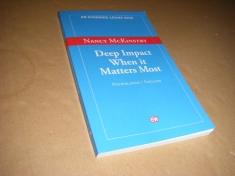
    Deep Impact when it Matters Most

    EW Economie-lezing 2022. Paperback, in zeer goede staat

    Nancy McKinstry, bestuursvoorzitter van informatieleverancier Wolters Kluwer, over de razendsnelle technologische veranderingen, de daaruit voortvloeiende ethische vraagstukken en het belang van diversiteit en inclusiviteit voor ondernemingen als Wolters Kluwer.00Dit boek bevat de Nederlandse vertaling plus het Engelse origineel - uitgebreid en geannoteerd - van de vijfde EW Economie-lezing die de bestuursvoorzitter van informatieleverancier Wolters Kluwer Nancy McKinstry donderdagavond 10 maart 2022 heeft uitgesproken in debatcentrum De Rode Hoed in Amsterdam.00De Amerikaanse McKinstry (63) is sinds september 2003 CEO en voorzitter van de raad van bestuur van informatieleverancier Wolters Kluwer. Toonaangevende media hebben haar herhaaldelijk een van de machtigste vrouwen in het bedrijfsleven genoemd. Ze staat op de lijst van Fortune International?s Most Powerful Women in Business en is opgenomen in HBR?s 2019-lijst van ?de meest effectieve CEO?s van de wereld?.00In de jaarlijkse EW Economie-lezing geven ondernemers, bestuurders van bedrijven en economen hun visie op ontwikkelingen in de samenleving. De EW Economie-lezing is eerder uitgesproken door Ben van Beurden (Shell), Pieter Elbers (KLM), Frans van Houten (Philips) en Jacco Vonhof (MKB-Nederland). Nancy McKinstry vertegenwoordigt bij dit eerste lustrum een dubbele primeur: zij is de eerste vrouw én de eerste niet-Nederlander die de EW Economie-lezing verzorgt.0.

    Nancy McKinstry ;

    € 5,00

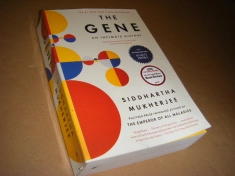
    The Gene

    The Gene

    In het Engels. Paperback, gebruikssporen, in redelijk tot best wel goede staat. 

    The #1 NEW YORK TIMES Bestseller
    The basis for the PBS Ken Burns Documentary The Gene: An Intimate History

    From the Pulitzer Prize–winning author of The Emperor of All Maladies—a fascinating history of the gene and “a magisterial account of how human minds have laboriously, ingeniously picked apart what makes us tick” (Elle).

    “Sid Mukherjee has the uncanny ability to bring together science, history, and the future in a way that is understandable and riveting, guiding us through both time and the mystery of life itself.” —Ken Burns

    “Dr. Siddhartha Mukherjee dazzled readers with his Pulitzer Prize-winning The Emperor of All Maladies in 2010. That achievement was evidently just a warm-up for his virtuoso performance in The Gene: An Intimate History, in which he braids science, history, and memoir into an epic with all the range and biblical thunder of Paradise Lost” (The New York Times). In this biography Mukherjee brings to life the quest to understand human heredity and its surprising influence on our lives, personalities, identities, fates, and choices.

    “Mukherjee expresses abstract intellectual ideas through emotional stories…[and] swaddles his medical rigor with rhapsodic tenderness, surprising vulnerability, and occasional flashes of pure poetry” (The Washington Post). Throughout, the story of Mukherjee’s own family—with its tragic and bewildering history of mental illness—reminds us of the questions that hang over our ability to translate the science of genetics from the laboratory to the real world. In riveting and dramatic prose, he describes the centuries of research and experimentation—from Aristotle and Pythagoras to Mendel and Darwin, from Boveri and Morgan to Crick, Watson and Franklin, all the way through the revolutionary twenty-first century innovators who mapped the human genome.

    “A fascinating and often sobering history of how humans came to understand the roles of genes in making us who we are—and what our manipulation of those genes might mean for our future” (Milwaukee Journal-Sentinel), The Gene is the revelatory and magisterial history of a scientific idea coming to life, the most crucial science of our time, intimately explained by a master. “The Gene is a book we all should read” (USA TODAY).

    Siddhartha Mukherjee ;

    € 7,50
    Bezig met laden...
    close

    Favorietenlijst