Filteren

Verfijn je keuze in deze categorie. Zoeken op auteur, ISBN, title of trefwoord? Dat kan eenvoudig via zoeken bovenaan.

Staat
Prijsrange
  • Filter

    Reviews

    Gemiddelde score voor Boek2

    Goede communicatie,

    snelle levering en prima verpakt.

    Extra korting

    %

    Meer boeken is meer korting!

    • Vanaf 5 boeken
    • Vanaf 10 boeken
    • Vanaf 15 boeken
    • Vanaf 20 boeken
    • 5% korting
    • 10% korting
    • 15% korting
    • 20% korting

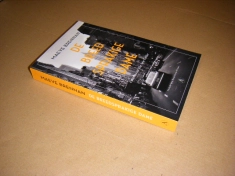
    The Oil Kings

    The Oil Kings

    Engelstalig gebonden boek met omslag, in zeer goede staat

    Increasing oil prices . . . America struggling with a recession . . . European nations at risk of defaulting on their loans . . . A possible global financial crisis. It happened before, in the 1970s.
    Oil Kings is the story of how oil came to dominate U.S. domestic and international affairs. As Richard Nixon fought off Watergate inquiries in 1973, the U.S. economy reacted to an oil shortage initiated by Arab nations in retaliation for American support of Israel in the Arab- Israeli war. The price of oil skyrocketed, causing serious inflation. One man the U.S. could rely on in the Middle East was the Shah of Iran, a loyal ally whose grand ambitions had made him a leading customer for American weapons. Iran sold the U.S. oil; the U.S. sold Iran missiles and fighter jets. But the Shah’s economy depended almost entirely on oil, and the U.S. economy could not tolerate annual double-digit increases in the price of this essential commodity. European economies were hit even harder by the soaring oil prices, and several NATO allies were at risk of default on their debt.

    In 1976, with the U.S. economy in peril, President Gerald Ford, locked in a tight election race, decided he had to find a country that would sell oil to the U.S. more cheaply and break the OPEC monopoly, which the Shah refused to do. On the advice of Treasury Secretary William Simon and against the advice of Secretary of State Henry Kissinger, Ford made a deal to sell advanced weaponry to the Saudis in exchange for a modest price hike on oil.

    Ford lost the election, but the deal had lasting consequences. The Shah’s economy was destabilized, and disaffected elements in Iran mobilized to overthrow him. The U.S. had embarked on a long relationship with the autocratic Saudi kingdom that continues to this day.

    Andrew Scott Cooper draws on newly declassified documents and interviews with some key figures of the time to show how Nixon, Ford, Kissinger, the CIA, and the State and Treasury departments—as well as the Shah and the Saudi royal family— maneuvered to control events in the Middle East. He details the secret U.S.-Saudi plan to circumvent OPEC that destabilized the Shah. He reveals how close the U.S. came to sending troops into the Persian Gulf to break the Arab oil embargo. The Oil Kings provides solid evidence that U.S. officials ignored warning signs of a potential hostage crisis in Iran. It discloses that U.S. officials offered to sell nuclear power and nuclear fuel to the Shah. And it shows how the Ford Administration barely averted a European debt crisis that could have triggered a financial catastrophe in the U.S. Brilliantly reported and filled with astonishing details about some of the key figures of the time, The Oil Kings is the history of an era that we thought we knew, an era whose momentous reverberations still influence events at home and abroad today.

    Andrew Scott Cooper ;

    € 22,50

    Hot, Flat, and Crowded

    Hot, Flat, and Crowded

    Engelstalige uitgave, gebonden met omslag, 

    From the Publisher: Thomas L. Friedman's No. 1 bestseller The World Is Flat has helped millions of readers to see the world, and globalization, in a new way. With his latest book, Friedman brings a fresh and provocative outlook to another pressing issue: the interlinked crises of destabilizing climate change and rising competition for energy-both of which could poison our world if we do not act quickly and collectively. His argument speaks to the 2008 presidential election-and to all of us who are concerned about the state of America and its role in the global future. "Green is the new red, white, and blue," Friedman declares, and proposes that an ambitious national strategy-which he calls geo-greenism-is not only what we need to save the planet from overheating, it is what we need to make America healthier, richer, more innovative, more productive, and more secure in the coming E C E-the Energy-Climate Era. Green-oriented practices and technologies, established at scale everywhere from Washington to Wal-Mart, are both the only way to mitigate climate change and the best way for America to "get its groove back"-to "reknit America at home, reconnect America abroad, retool America for the new century, and restore America to its natural place in the global order." As in The World Is Flat and his previous bestseller The Lexus and the Olive Tree, he explains the future we are facing through an illuminating account of recent events. He explains how 9/11, Hurricane Katrina, and the flattening of the world by the Internet, which has brought three billion new consumers onto the world stage, have combined to bring the climate and energy issues to main street. But they have not really gone down main street yet. Indeed, it is Friedman's view that we are not really having the green revolution that the press keeps touting, or, if we are, "it is the only revolution in history," he says, "where no one got hurt." No, to the contrary, argues Friedman, we're actually having a "green party." We have not even begun to be serious yet about the speed and scale of change that is required. With all that in mind, Friedman lays out his argument that if we are going to avoid the worst disruptions looming before us as we enter the Energy-Climate Era, we are going to need several disruptive breakthroughs in the clean-technology sphere-disruptive in the transformational sense. He explores what enabled the disruptive breakthroughs that created the IT (Information Technology) revolution that flattened the world in information terms and then shows how a similar set of disruptive breakthroughs could spark the ET-Energy Technology-revolution. Time and again, though, Friedman shows why it is both necessary and desirous for America to lead this revolution-with the first green president, a green New Deal, and spurred by the Greenest Generation-and why meeting the green challenge of the twenty-first century could transform America every bit as meeting the Red challenge, that of Communism, did in the twentieth century. Hot, Flat, and Crowded is classic Thomas L Friedman-fearless, incisive, forward-looking, and rich in surprising common sense about the world we live in today.

    Thomas L. Friedman ;

    € 8,50
    Bezig met laden...
    close

    Favorietenlijst