Filteren

Verfijn je keuze in deze categorie. Zoeken op auteur, ISBN, title of trefwoord? Dat kan eenvoudig via zoeken bovenaan.

Staat
Prijsrange
  • Filter

    Reviews

    Gemiddelde score voor Boek2

    Goede communicatie,

    snelle levering en prima verpakt.

    Extra korting

    %

    Meer boeken is meer korting!

    • Vanaf 5 boeken
    • Vanaf 10 boeken
    • Vanaf 15 boeken
    • Vanaf 20 boeken
    • 5% korting
    • 10% korting
    • 15% korting
    • 20% korting

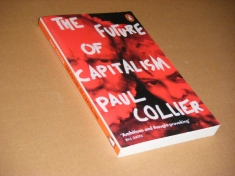
    The Future of Capitalism

    The Future of Capitalism

    Engels, paperback, als nieuw

    *FEATURED IN BILL GATES'S 2019 SUMMER READING RECOMMENDATIONS*

    'This is a beautifully written and important book. Read it' Martin Wolf, Financial Times

    From world-renowned economist Paul Collier, a candid diagnosis of the failures of capitalism and a pragmatic and realistic vision for how we can repair it

    Deep new rifts are tearing apart the fabric of Britain and other Western societies: thriving cities versus the provinces, the highly skilled elite versus the less educated, wealthy versus developing countries. As these divides deepen, we have lost the sense of ethical obligation to others that was crucial to the rise of post-war social democracy. So far these rifts have been answered only by the revivalist ideologies of populism and socialism, leading to the seismic upheavals of Trump, Brexit and the return of the far right in Germany. We have heard many critiques of capitalism but no one has laid out a realistic way to fix it, until now.

    In a passionate and polemical book, celebrated economist Paul Collier outlines brilliantly original and ethical ways of healing these rifts - economic, social and cultural - with the cool head of pragmatism, rather than the fervour of ideological revivalism. He reveals how he has personally lived across these three divides, moving from working-class Sheffield to hyper-competitive Oxford, and working between Britain and Africa, and acknowledges some of the failings of his profession.

    Drawing on his own solutions as well as ideas from some of the world's most distinguished social scientists, he shows us how to save capitalism from itself - and free ourselves from the intellectual baggage of the 20th century.

    These times are in desperate need of Paul Collier's insights. The Future of Capitalism restores common sense to our views of morality, as it also describes their critical role in what makes families, organizations, and nations work. It is the most revolutionary work of social science since Keynes. Let's hope it will also be the most influential - George Akerlof, Nobel Laureate in Economics, 2001

    In this bold work of intellectual trespass, Paul Collier, a distinguished economist, ventures onto the terrain of ethics to explain what's gone wrong with capitalism, and how to fix it. To heal the divide between metropolitan elites and the left-behind, he argues, we need to rediscover an ethic of belonging, patriotism, and reciprocity. Offering inventive solutions to our current impasse, Collier shows how economics at its best is inseparable from moral and political philosophy' - Michael Sandel, author of What Money Can't Buy and Justice

    For thirty years, the centre left of politics has been searching for a narrative that makes sense of the market economy. This book provides it - John Kay, Fellow of St John's College, Oxford and the author of Obliquity and Other People's Money

    For well-to-do metropolitans, capitalism is the gift that goes on giving. For others, capitalism is not working. Paul Collier deploys passion, pragmatism and good economics in equal measure to chart an alternative to the divisions tearing apart so many western countries. -Mervyn King, former Governor of the Bank of England

    Paul Collier ;

    € 6,50

    Foretelling the End of...

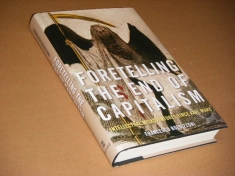
    Foretelling the End of Capitalism

    Engels, Gebonden met omslag, als nieuw

    Intellectuals since the Industrial Revolution have been obsessed with whether, when, and why capitalism will collapse. This riveting account of two centuries of failed forecasts of doom reveals the key to capitalism’s durability.
    Prophecies about the end of capitalism are as old as capitalism itself. None have come true. Yet, whether out of hope or fear, we keep looking for harbingers of doom. In Foretelling the End of Capitalism, Francesco Boldizzoni gets to the root of the human need to imagine a different and better world and offers a compelling solution to the puzzle of why capitalism has been able to survive so many shocks and setbacks.
    Capitalism entered the twenty-first century triumphant, its communist rival consigned to the past. But the Great Recession and worsening inequality have undermined faith in its stability and revived questions about its long-term prospects. Is capitalism on its way out? If so, what might replace it? And if it does endure, how will it cope with future social and environmental crises and the inevitable costs of creative destruction? Boldizzoni shows that these and other questions have stood at the heart of much analysis and speculation from the early socialists and Karl Marx to the Occupy Movement. Capitalism has survived predictions of its demise not, as many think, because of its economic efficiency or any intrinsic virtues of markets but because it is ingrained in the hierarchical and individualistic structure of modern Western societies.

    Foretelling the End of Capitalism takes us on a fascinating journey through two centuries of unfulfilled prophecies. An intellectual tour de force and a plea for political action, it will change our understanding of the economic system that determines the fabric of our lives.

    Francesco Boldizzoni ;

    € 16,50

    From the Ruins of Empire

    From the Ruins of Empire

    Engels. Paperback, als nieuw

    Pankaj Mishra's provocative account of how China, India and the Muslim World are remaking the world in their own image - shortlisted for the Orwell Prize 2013
    SHORTLISTED FOR THE ORWELL PRIZE 2013
    Viewed in the West as a time of self-confident progress, the Victorian period was experienced by Asians as a catastrophe. As the British gunned down the last heirs to the Mughal Empire or burned down the Summer Palace in Beijing, it was clear that for Asia to recover a new way of thinking was needed. Pankaj Mishra re-tells the history of the past two centuries, showing how a remarkable, disparate group of thinkers, journalists, radicals and charismatics emerged from the ruins of empire to create an unstoppable Asian renaissance, one whose ideas lie behind everything from the Chinese Communist Party to the Muslim Brotherhood, and have made our world what it is today.
    Reviews-
    'Arrestingly original ... this penetrating and disquieting book should be on the reading list of anybody who wants to understand where we are today' John Gray, Independent

    'A riveting account that makes new and illuminating connections ... deeply entertaining and deeply humane' Hisham Matar
    'Fascinating ... a rich and genuinely thought-provoking book' Noel Malcolm, Sunday Telegraph
    'Provocative, shaming and convincing' Michael Binyon, The Times

    'Lively ... engaging ... retains the power to shock' Mark Mazower, Financial Times

    'Subtle, erudite and entertaining' Economist, New Delhi
    About the author-
    Pankaj Mishra is the author of Butter Chicken in Ludiana, The Romantics, An End to Suffering and Temptations of the West. He writes principally for the Guardian, The New York Times, London Review of Books and New York Review of Books. He lives in London, Shimla and New York.

    Pankaj Mishra ;

    € 8,50

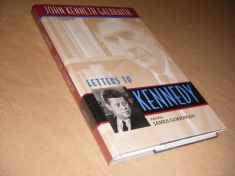
    Letters to Kennedy

    Letters to Kennedy

    Engels. Halflinnen gebonden met omslag netje in apart plastic hoesje. Alles in zeer goede staat

    A unique document in the history of the Kennedy years, these letters give us a firsthand look at the working relationship between a president and one of his close advisers, John Kenneth Galbraith. In an early letter, Galbraith mentions his "ambition to be the most reticent adviser in modern political history." But as a respected intellectual and author of the celebrated The Affluent Society, he was not to be positioned so lightly, and his letters are replete with valuable advice about economics, public policy, and the federal bureaucracy. As the United States' ambassador to India from 1961 to 1963, Galbraith made use of his position to counsel the President on foreign policy, especially as it bore on the Asian subcontinent and, ultimately, Vietnam.

    Written with verve and wit, his letters were relished by a president who had little patience for foolish ideas or bad prose. They stand out today as a vibrant chronicle of some of the most subtle and critical moments in the days of the Kennedy administration--and a fascinating record of the counsel that Galbraith offered President Kennedy. Ranging from a pithy commentary on Kennedy's speech accepting the 1960 Democratic presidential nomination (and inaugurating the "New Frontier") to reflections on critical matters of state such as the Cuban Missile Crisis and the threat of Communism in Indochina, Letters to Kennedypresents a rare, intimate picture of the lives and minds of a political intellectual and an intellectual politician during a particularly bright moment in American history.

    John Kenneth Galbraith ;

    € 15,00

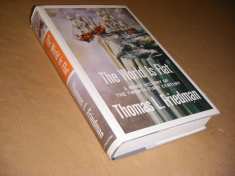
    The World Is Flat

    The World Is Flat

    Engels, halflinnen gebonden met omslag, in zeer goede staat

    When scholars write the history of the world twenty years from now, and they come to the chapter "Y2K to March 2004," what will they say was the most crucial development? The attacks on the World Trade Center on 9/11 and the Iraq war? Or the convergence of technology and events that allowed India, China, and so many other countries to become part of the global supply chain for services and manufacturing, creating an explosion of wealth in the middle classes of the world's two biggest nations, giving them a huge new stake in the success of globalization? And with this "flattening" of the globe, which requires us to run faster in order to stay in place, has the world gotten too small and too fast for human beings and their political systems to adjust in a stable manner?

    In this brilliant new book, the award-winning New York Times columnist Thomas Friedman demystifies the brave new world for readers, allowing them to make sense of the often bewildering global scene unfolding before their eyes. With his inimitable ability to translate complex foreign policy and economic issues, Friedman explains how the flattening of the world happened at the dawn of the twenty-first century; what it means to countries, companies, communities, and individuals; and how governments and societies can, and must, adapt. The World Is Flat is the timely and essential update on globalization, its successes and discontents, powerfully illuminated by one of our most respected journalists.

    Thomas L. Friedman ;

    € 8,50
    € 11,50
    Bezig met laden...
    close

    Favorietenlijst