Filteren

Verfijn je keuze in deze categorie. Zoeken op auteur, ISBN, title of trefwoord? Dat kan eenvoudig via zoeken bovenaan.

Staat
Prijsrange
  • Filter

    Reviews

    Gemiddelde score voor Boek2

    Goede communicatie,

    snelle levering en prima verpakt.

    Extra korting

    %

    Meer boeken is meer korting!

    • Vanaf 5 boeken
    • Vanaf 10 boeken
    • Vanaf 15 boeken
    • Vanaf 20 boeken
    • 5% korting
    • 10% korting
    • 15% korting
    • 20% korting

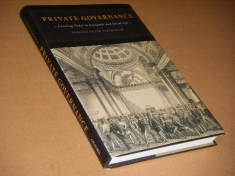
    Private Governance....

    Private Governance. Creating Order in Economic and Social Life

    Engels. Gebonden met omslag, als nieuw

    From the first stock markets of Amsterdam, London, and New York to the billions of electronic commerce transactions today, privately produced and enforced economic regulations are more common, more effective, and more promising than commonly considered.

    In Private Governance, prominent economist Edward Stringham presents case studies of the various forms of private enforcement, self-governance, or self-regulation among private groups or individuals that fill a void that government enforcement cannot. Through analytical narratives the book provides a close examination of the world's first stock markets, key elements of which were unenforceable by law; the community of Celebration, Florida, and other private communities that show how public goods can be bundled with land and provided more effectively; and the millions of credit-card transactions that occur daily and are regulated by private governance. Private Governance ultimately argues that while potential problems of private governance, such as fraud, are pervasive, so are the solutions it presents, and that much of what is orderly in the economy can be attributed to private groups and individuals. With meticulous research, Stringham demonstrates that private governance is a far more common source of order than most people realize, and that private parties have incentives to devise different mechanisms for eliminating unwanted behavior.

    Private Governance documents numerous examples of private order throughout history to illustrate how private governance is more resilient to internal and external pressure than is commonly believed. Stringham discusses why private governance has economic and social advantages over relying on government regulations and laws, and explores the different mechanisms that enable private governance, including sorting, reputation, assurance, and other bonding mechanisms. Challenging and rigorously-written, Private Governance will make a compelling read for those with an interest in economics, political philosophy, and the history of current Wall Street regulations.

    Edward Stringham ;

    € 30,00

    The Winner's Curse

    The Winner's Curse

    Engels. Paperback, als nieuw

    Richard Thaler challenges the received economic wisdom by revealing many of the paradoxes that abound even in the most painstakingly constructed transactions. He presents literate, challenging, and often funny examples of such anomalies as why the winners at auctions are often the real losers--they pay too much and suffer the "winner's curse"-- why gamblers bet on long shots at the end of a losing day, why shoppers will save on one appliance only to pass up the identical savings on another, and why sports fans who wouldn't pay more than $200 for a Super Bowl ticket wouldn't sell one they own for less than $400. He also demonstrates that markets do not always operate with the traplike efficiency we impute to them.Richard Thaler challenges the received economic wisdom by revealing many of the paradoxes that abound even in the most painstakingly constructed transactions. He presents literate, challenging, and often funny examples of such anomalies as why the winners at auctions are often the real losers--they pay too much and suffer the "winner's curse"-- why gamblers bet on long shots at the end of a losing day, why shoppers will save on one appliance only to pass up the identical savings on another, and why sports fans who wouldn't pay more than $200 for a Super Bowl ticket wouldn't sell one they own for less than $400. He also demonstrates that markets do not always operate with the traplike efficiency we impute to them.

    Richard H. Thaler ;

    € 11,50

    Beyond the Crisis. The...

    Beyond the Crisis. The Future of Capitalism

    Engelstalige paperback, mooi ex. in nette staat

    The Current Deep Economic Crisis Marks a Great Transition. The Chinese phrase for crisis consists of two words danger and opportunity. In Beyond the Crisis: The Future of Capitalism, renowned futurologist, Adjiedj Bakas, leads you through, and then out of, the New Great Depression of the 21st century. The current economic crisis marks the end of an era, and the start of a new one. It is the 5th major crisis in 200 years' time. All of them occurred at the transition from one era to the next. The 1930s may have been a time of deep economic crisis and mass unemployment, yet in those days the Kennedys made their fortunes, art deco was born and the radio, car, and telephone grew to be so much in demand that great new industries emerged out of the ashes of the crisis. During the major economic crisis of the 1980s the personal computer, mobile phone and Internet were born and developed into major new industries. During the current crisis we finally say goodbye to the 20th century and transit into the new, post-material economy with new economic pillars and the mixture with digital collaboration powered by "cloud computing," the next generation Internet. We say hello to a new era, with China as the new global powerhouse instead of the U.S., with globalization turning into slowbalization, with less wealth and more focus on the Economy of Happiness. "Bakas looks behind today¿s headlines and uses knowledge and wisdom from different fields: economics, technology, philosophy and spirituality, in order to grasp what is really going on in our world, and the real changes in our global economy. I truly recommend this book because it may change your future and that of your children." --Professor Jianmao Wang, Economist at the China Europe International Business School

    Adjiedj Bakas ;

    € 3,85

    Fantoomgroei

    Fantoomgroei

    Paperback, in goede staat

    Er is iets vreemds aan de hand. We waren nog nooit zo rijk als nu. Bedrijfswinsten, vermogens, pensioenpotten: naar bijna alle traditionele maatstaven leven we in uitzonderlijk welvarende tijden. Maar wie beter kijkt, ziet dat steeds minder mensen meedelen in al die welvaart. Ouderen moeten langer door tot hun pensioen. Jongeren hebben het voor het eerst minder goed dan hun ouders. En een woning is in veel steden ook voor de betere middenklasse onbetaalbaar. Zelfs wie zuinig leeft heeft een probleem: sparen kost binnenkort geld. Sander Heijne en Hendrik Noten onderzochten waar het misging met onze economie. Hoe kan het dat vrijwel niemand de groei van de economie nog terugziet in zijn of haar portemonnee? Wat bedoelen onze politici eigenlijk, als ze elkaar feliciteren met een 'goed presterende economie'? De zoektocht bracht ze van premier Rutte tot de oprichters van Uber, naar de boeken van Adam Smith. En van conferenties op Zwitserse bergtoppen tot de achterkamertjes van Den Haag. Vliegend door de tijd ontrafelen ze het systeem en rollen ze van de ene verbazing in de andere. Met als conclusie: de huidige hang naar groei is geen noodzaak, maar het resultaat van een verhaal dat we zijn gaan geloven. Er is niets vanzelfsprekends aan stagnerende lonen of veel te hoge huizenprijzen. Het kan anders: eerlijker en duurzamer. Het is tijd voor een nieuw verhaal, waarin de economie weer voor ons werkt, in plaats van wij voor de economie. Bron : https://www.businesscontact.nl.

    Sander Heijne; Hendrik Noten ;

    € 6,00

    The Federal Reserve...

    The Federal Reserve and the Financial Crisis

    Engels. In linnen gebonden, in zeer goede staat

    Ben Bernanke's history of the Federal Reserve and its response to the 2008 financial crisis

    In 2012, Ben Bernanke, chairman of the U.S. Federal Reserve, gave a series of lectures about the Federal Reserve and the 2008 financial crisis, as part of a course at George Washington University on the role of the Federal Reserve in the economy. In this unusual event, Bernanke revealed important background and insights into the central bank's crucial actions during the worst financial crisis since the Great Depression. Taken directly from these historic talks, The Federal Reserve and the Financial Crisis offers insight into the guiding principles behind the Fed's activities and the lessons to be learned from its handling of recent economic challenges.

    Bernanke traces the origins of the Federal Reserve, from its inception in 1914 through the Second World War, and he looks at the Fed post-1945, when it began operating independently from other governmental departments such as the Treasury. During this time the Fed grappled with episodes of high inflation, finally tamed by then-chairman Paul Volcker. Bernanke also explores the period under his predecessor, Alan Greenspan, known as the Great Moderation. Bernanke then delves into the Fed's reaction to the recent financial crisis, focusing on the central bank's role as the lender of last resort and discussing efforts that injected liquidity into the banking system. Bernanke points out that monetary policies alone cannot revive the economy, and he describes ongoing structural and regulatory problems that need to be addressed.

    Providing first-hand knowledge of how problems in the financial system were handled, The Federal Reserve and the Financial Crisis will long be studied by those interested in this critical moment in history.

    Ben Bernanke ;

    € 11,50

    Never Enough....

    Never Enough. America's Limitless Welfare State

    Forse Engelstalige hardcover met stofomslag, als nieuw, Like NEW.

    Since the beginning of the New Deal, American liberals have insisted that the government must do more--much more--to help the poor, to increase economic security, to promote social justice and solidarity, to reduce inequality, and to mitigate the harshness of capitalism. Nonetheless, liberals have never answered, or even acknowledged, the corresponding question: What would be the size and nature of a welfare state that was not contemptibly austere, that did not urgently need new programs, bigger budgets, and a broader mandate? Even though the federal government's outlays have doubled every eighteen years since 1940, liberal rhetoric is always addressed to a nation trapped in Groundhog Day, where every year is 1932, and none of the existing welfare state programs that spend tens of billions of dollars matter, or even exist.

    Never Enough explores the roots and consequences of liberals' aphasia about the welfare state's ultimate size. It assesses what liberalism's lack of a limiting principle says about the long-running argument between liberals and conservatives, and about the policy choices confronting America in a new century. Never Enough argues that the failure to speak clearly and candidly about the welfare state's limits has grave policy consequences. The worst result, however, is the way it has jeopardized the experiment in self-government by encouraging Americans to regard their government as a vehicle for exploiting their fellow-citizens, rather than as a compact for respecting one another's rights and safeguarding the opportunities of future generations.
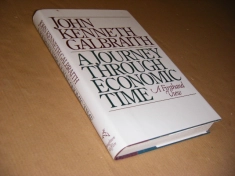
    William J. Voegeli ;

    € 11,50

    Making the World Work...

    Making the World Work Better

    Engels. Paperback, vrijwel als nieuw
    Thomas J Watson Sr's motto for IBM was THINK, and for more than a century, that one little word worked overtime. In Making the World Work Better: The Ideas That Shaped a Century and a Company , journalists Kevin Maney, Steve Hamm, and Jeffrey M. O'Brien mark the Centennial of IBM's founding by examining how IBM has distinctly contributed to the evolution of technology and the modern corporation over the past 100 years.

    The authors offer a fresh analysis through interviews of many key figures, chronicling the Nobel Prize-winning work of the company's research laboratories and uncovering rich archival material, including hundreds of vintage photographs and drawings. The book recounts the company's missteps, as well as its successes. It captures moments of high drama - from the bet-the-business gamble on the legendary System/360 in the 1960s to the turnaround from the company's near-death experience in the early 1990s.

    The authors have shaped a narrative of discoveries, struggles, individual insights and lasting impact on technology, business and society. Taken together, their essays reveal a distinctive mindset and organizational culture, animated by a deeply held commitment to the hard work of progress. IBM engineers and scientists invented many of the building blocks of modern information technology, including the memory chip, the disk drive, the scanning tunneling microscope (essential to nanotechnology) and even new fields of mathematics. IBM brought the punch-card tabulator, the mainframe and the personal computer into the mainstream of business and modern life. IBM was the first large American company to pay all employees salaries rather than hourly wages, an early champion of hiring women and minorities and a pioneer of new approaches to doing business--with its model of the globally integrated enterprise. And it has had a lasting impact on the course of society from enabling the US Social Security System, to the space program, to airline reservations, modern banking and retail, to many of the ways our world today works.

    The lessons for all businesses - indeed, all institutions - are powerful: To survive and succeed over a long period, you have to anticipate change and to be willing and able to continually transform. But while change happens, progress is deliberate. IBM - deliberately led by a pioneering culture and grounded in a set of core ideas - came into being, grew, thrived, nearly died, transformed itself... and is now charting a new path forward for its second century toward a perhaps surprising future on a planetary scale.

    Kevin Maney; Steve Hamm; Jeffrey M. OBrien ;

    € 7,50
    Bezig met laden...
    close

    Favorietenlijst